


With all the coffee and wine you’ll be drinking in Paris, it’s good to know there are plenty of free public restrooms. French toilets aren’t as bad as people think they will be, but there are definitely a few quirks.
In this article:
The Lowdown on French Toilets
- Toilet paper is just like at home, either in rolls or individual pieces like tissues. But sometimes there’s none at all, so keep a tissue packet handy.
- Most public toilets are free since 2006, but the ones in train stations and shopping malls like the Carrousel du Louvre may require a small fee to use. Some brasseries still require a coin to unlock the door (if you don’t have one as the server for a token, or jeton), but these are far fewer than ten years ago because no one carries coins anymore.
- There are some truly noteworthy restrooms in Paris, usually found in expensive restaurants and chic hotels. The Art Nouveau public toilets at the Place de la Madeleine are worth a visit if you’re in the area (look for stairs going down on the southeast side of the church square).
- But there are also — in some scruffy older cafés and bars — Turkish Toilets, which consist of a ceramic base with a hole in the center (squat if you’re a female or have bad aim; keep your feet clear when you flush, there tends to be splashing).
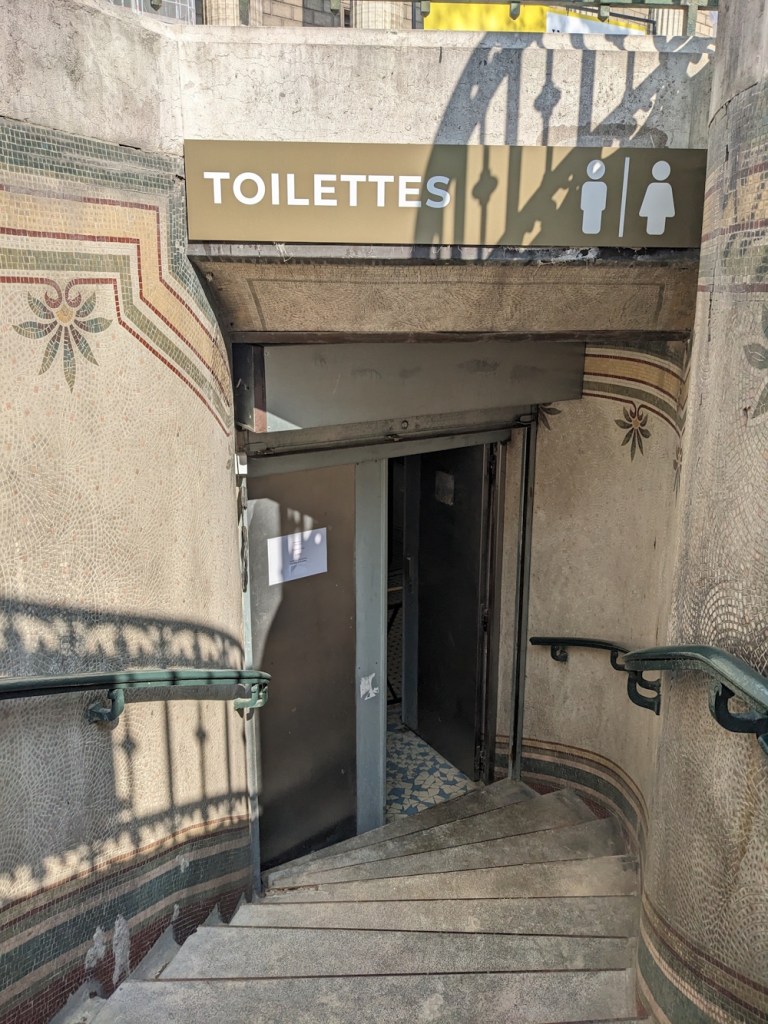
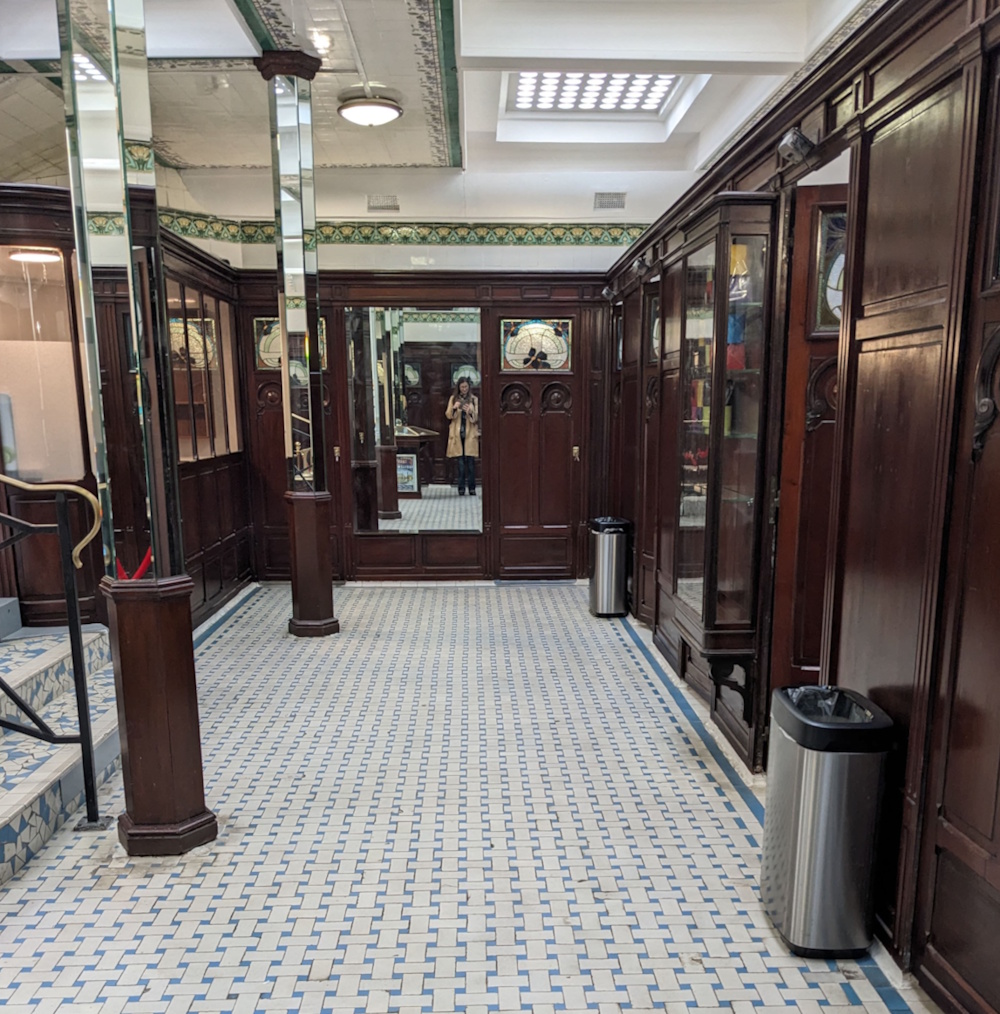

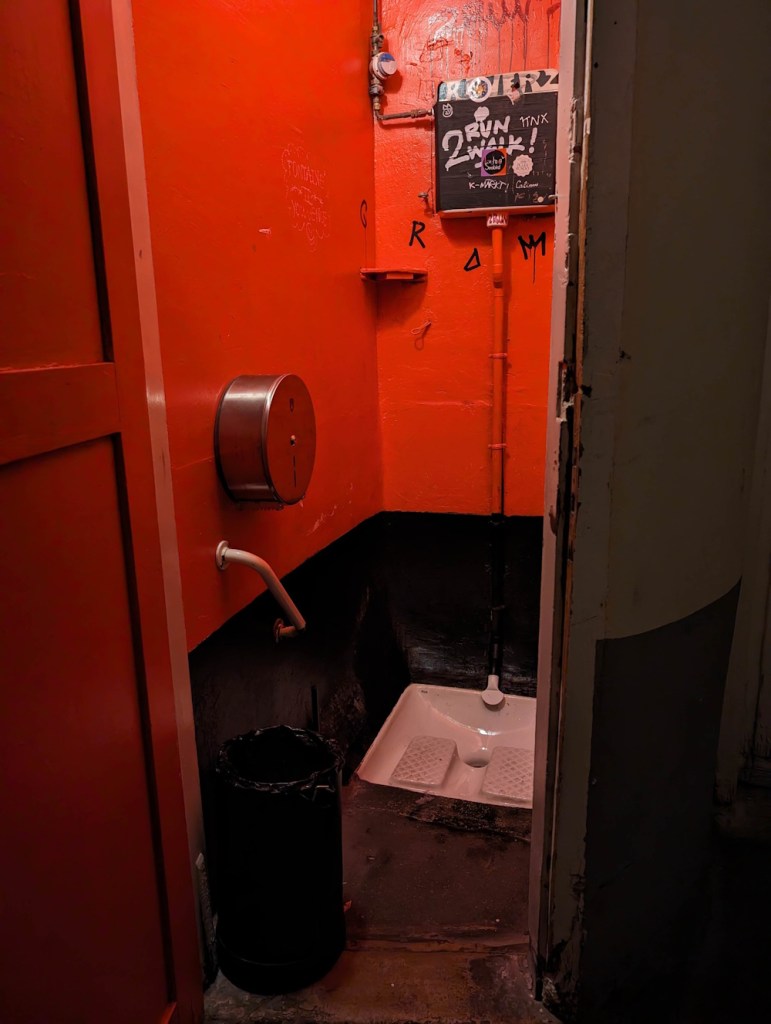
- The toilets in bars, cafés and restaurants are almost always downstairs, and often unisex (there’s a full door to close and lock, not just a stall). You may even have to walk past a urinal to get to the women’s stall.
- The lights are often on timers, or only work once the door is closed or when movement is detected. If the light goes out just push or turn the button again.
- There’s more than one way to flush a French toilet: push a button, yank a chain, pull a lever, stand up (automatic sensor), etc.

- In France, women have no issues using the men’s room if there’s a long line for the ladies’ (and sometimes you’ll see men coming out of a restroom designated for women). This is not considered a “big deal” in France, especially since most WCs have enclosed rooms with a full door (see photo above), not stalls that someone could peek over/under.
- Bathrooms in museums and monuments (as well as the sanisettes, see below) are often the only handicap-accessible restrooms outside of your hotel room.
Using the Sanisettes (Public Toilets)
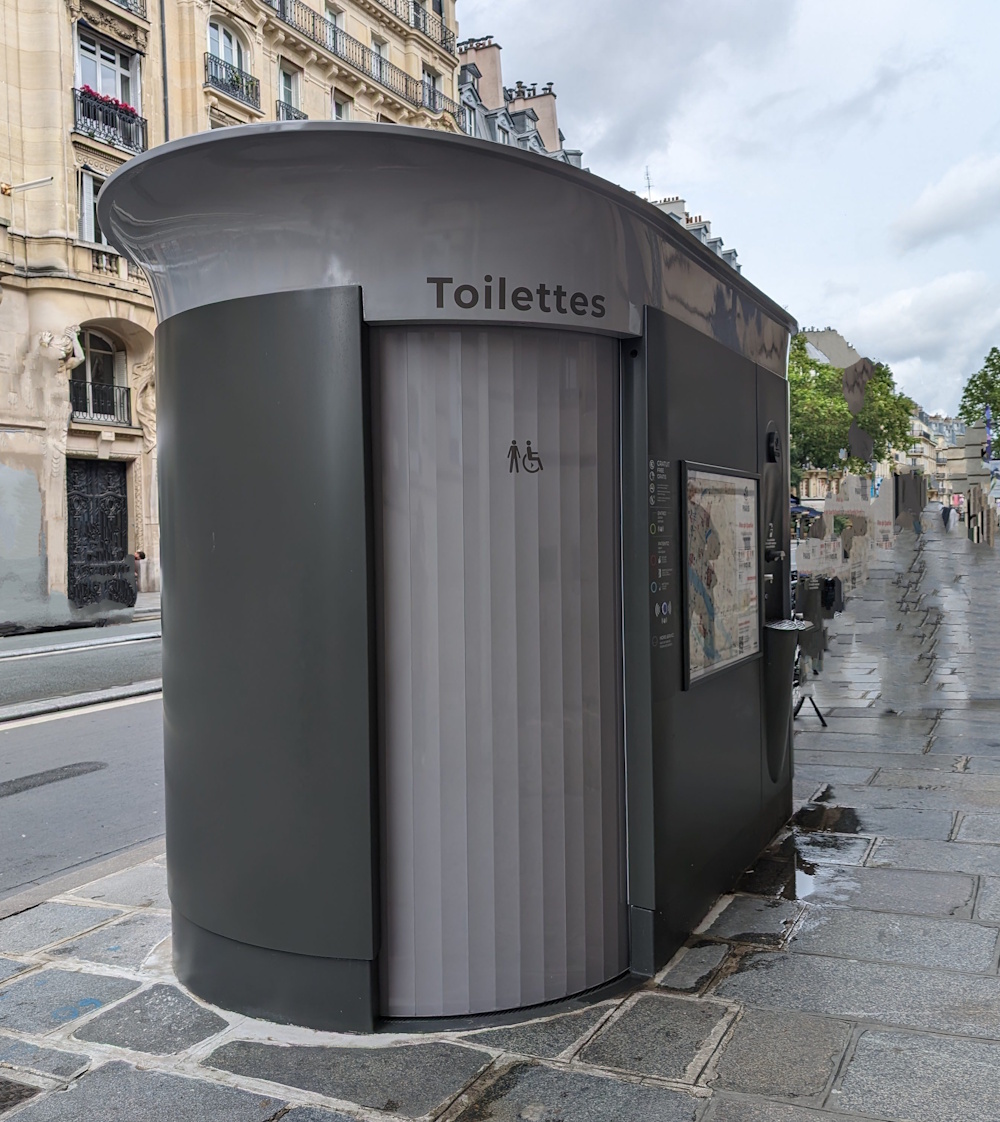
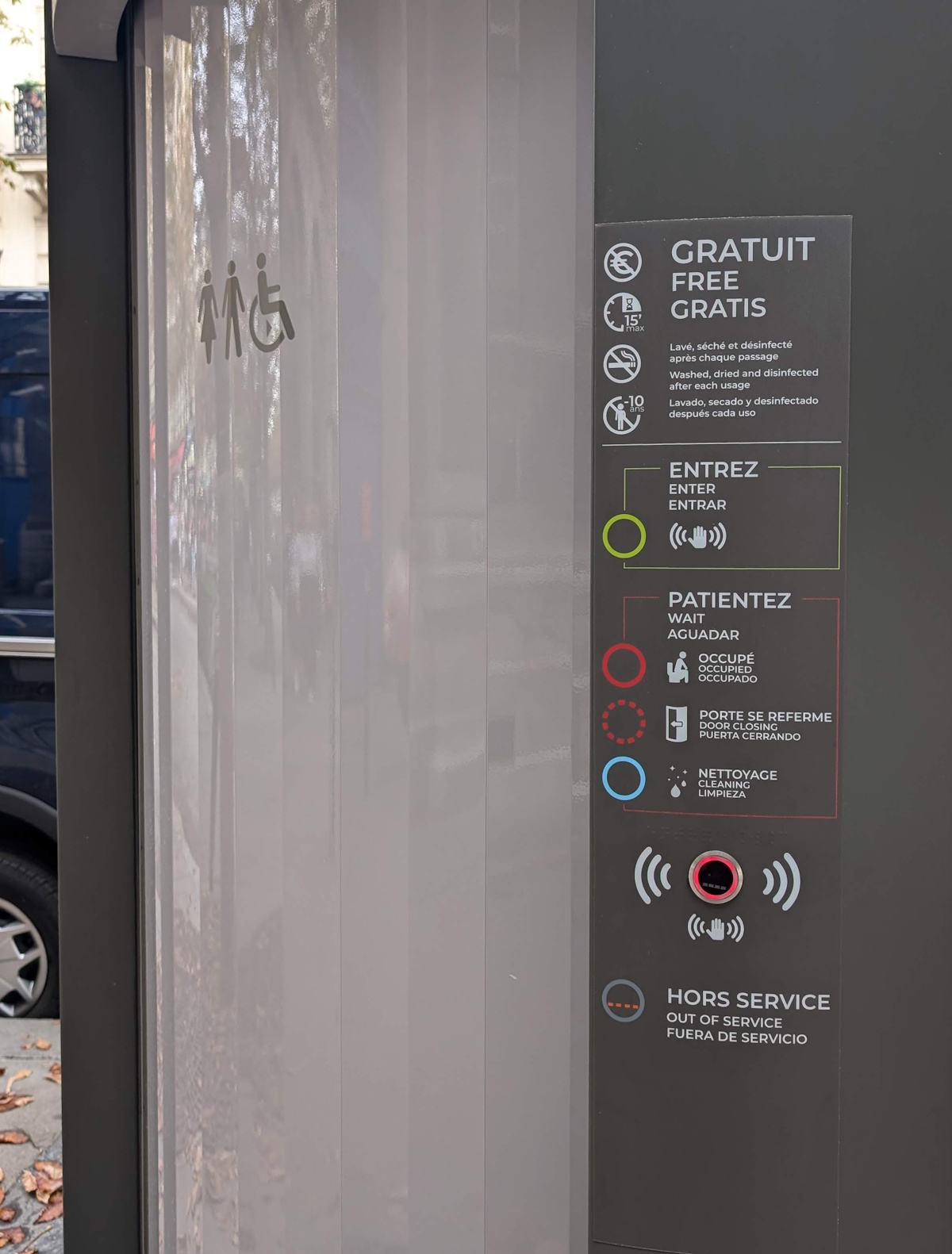
To help out the tourists and cut down on public urination (which, to be honest, is mostly French men), there are over 400 free public toilet cabins in Paris known as sanisettes, pictured above. They’re completely automated and self-cleaning between each use.
To start, look at the color of the lit up circle outside the door: red means it’s occupied, blue means it’s being washed (you can usually hear it, like a dishwasher), green means it’s vacant, and “hors service” down at the means it’s broken. Just wave your hand over the button when it turns green and the door opens. IMPORTANT: do NOT go in immediately behind someone coming out when the door is open, because it will go into “wash” mode!
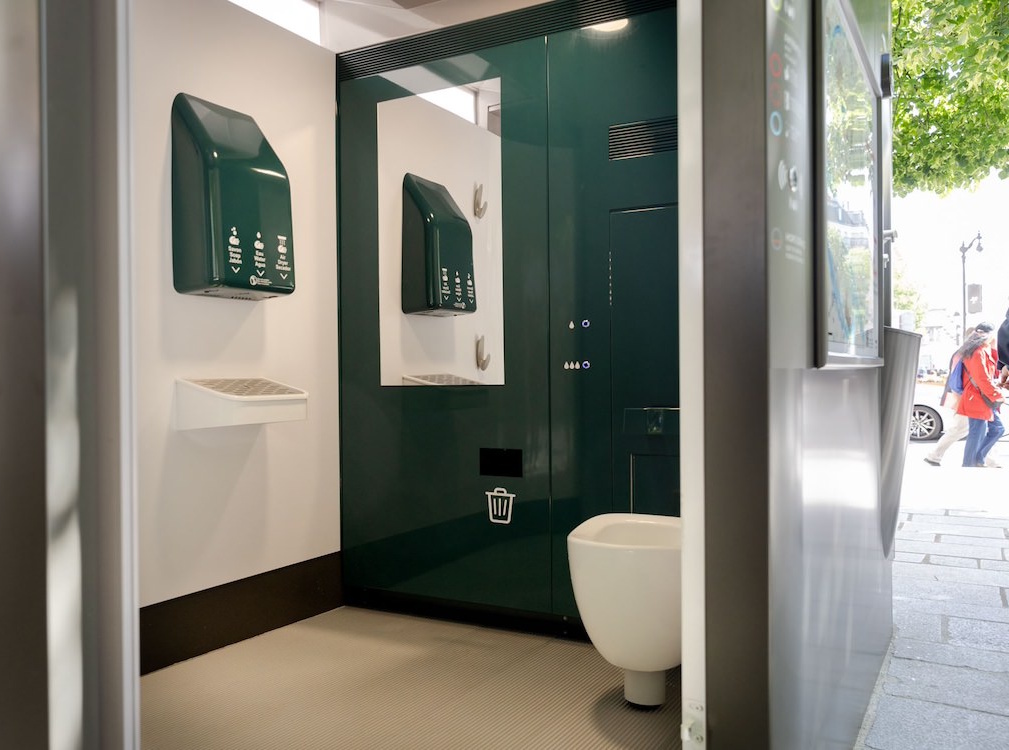
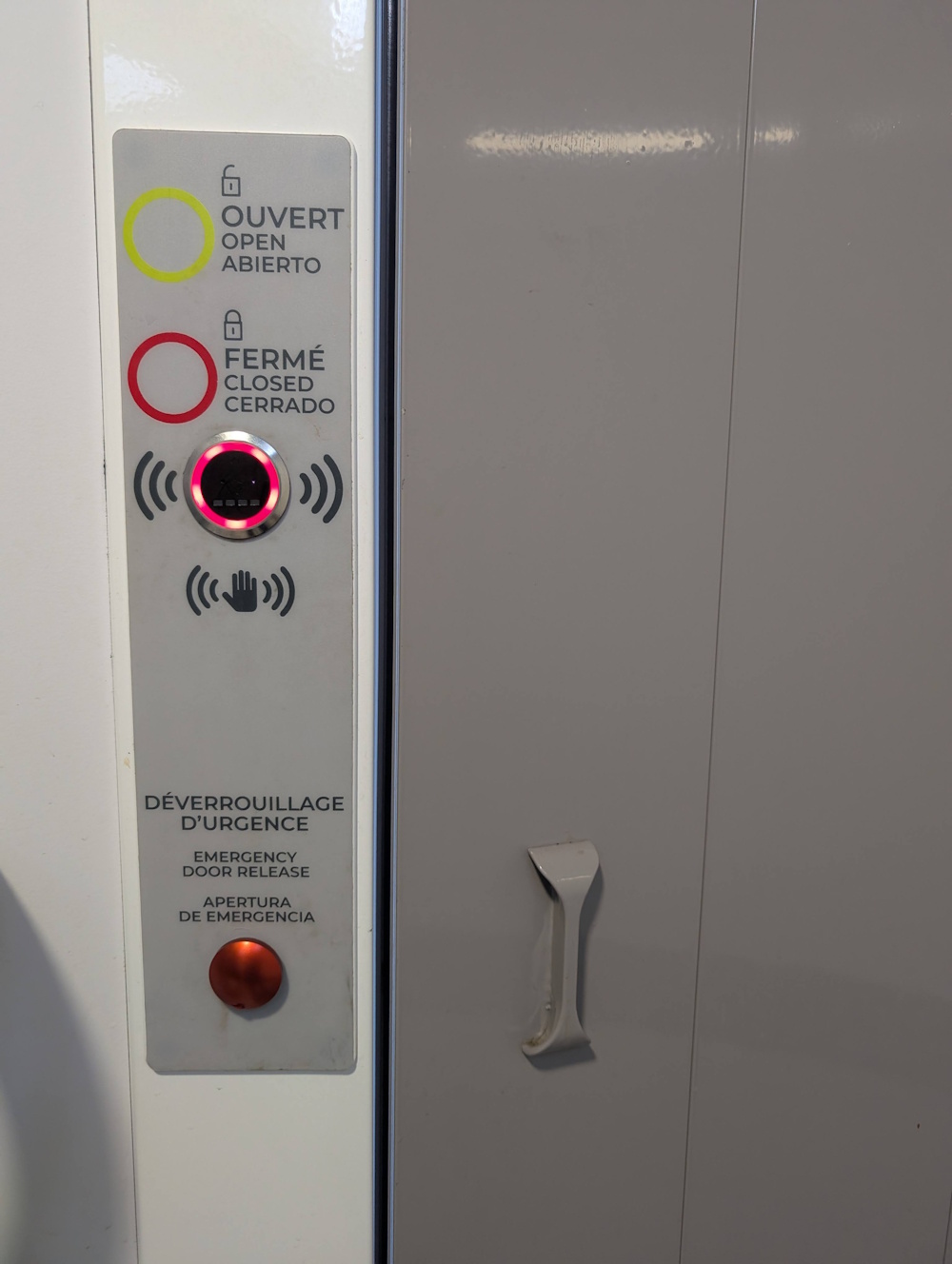
Once you’re inside, the door closes automatically behind you, and automatically locks without you touching anything (the red circle lights up). Do NOT touch it until you’re ready to go (after 15 minutes it will unlock, so don’t plan on camping out in there).
If the button doesn’t work, you can pull the red emergency knob to open it manually. There is a place to wash your hands and — hopefully — toilet paper and soap. There’s a mirror and hooks on the wall as well. You can push the big flush or little flush buttons, but they don’t actually “activate” until you’ve exited the sanisette.
When you leave, the door will close behind you, then go immediately into “wash” mode for about 30 seconds. If your friends are waiting to use it, too, make sure they WAIT until the wash cycle completes; as mentioned above, they’ll get “washed” if they walk in right as you come out. Also, it’s good to know that if you go in just after it has just been washed, the floors will be wet, but clean (ish).
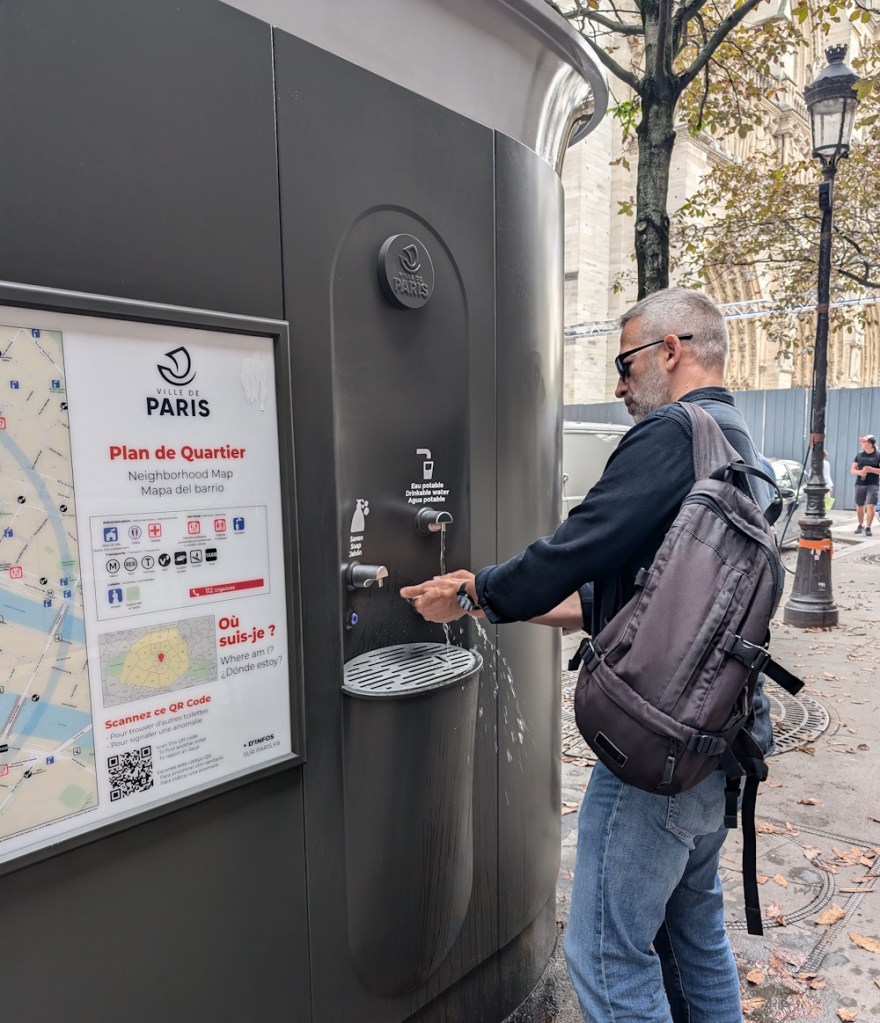

There’s a soap and drinking water dispenser on the side so you can wash your hands or fill up your bottle without going inside. There’s also a map of the neighborhood, which could be handy for finding other sanisettes if this one is out of order). Around the back is a urinoir for men (or anyone who is able to pee standing up). A red light tells you when it’s occupied, but you can also see the feet, so…
Where to Find Them
The sanisettes are all over Paris, on busy streets, near monuments, and in public parks. You can find them using this interactive map. An alternative is Wayside, a free map of public toilets, drinking fountains and other things (like luggage storage, ATMs), built from OpenStreetMap data.
You can also find free restrooms in Town Halls (Mairies, usually closed by 5pm and on weekends), along the Rives de Seine (the pedestrianized banks of the Seine, with more during Paris Plage in July-August), at a few metro entrances, and in department stores. As mentioned above, shopping malls (like the Carrousel du Louvre) and train stations often charge a small fee for restrooms even if you’re a customer (you can usually pay with a credit card instead of loose change). You can access the train station toilets for free if you have a Navigo card (with a photo on it); just show the attendant your card and they’ll open the gate for you.
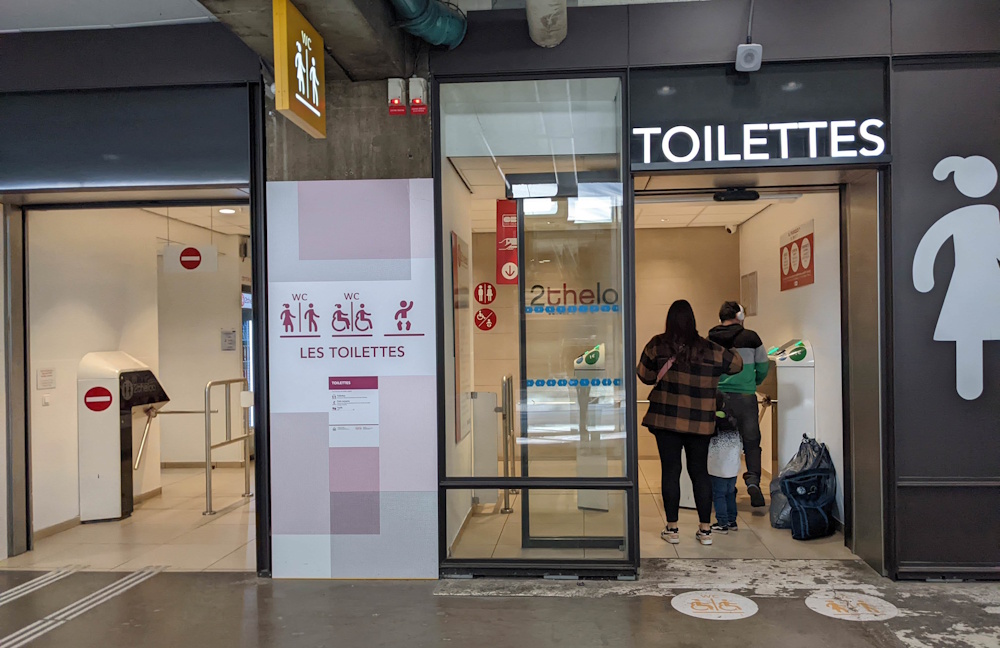
You won’t find public restrooms in churches, small shops, or supermarkets. Fast food places tend to require a code on your receipt to access the bathrooms (like the McDonald’s on the Champs-Elysées). If it’s an emergency, the easiest thing to do when walking around is to order an espresso standing at any café that has a bar (which is cheaper and faster than sitting down) and then use their restroom.
Vocab: When asking for the restroom, always say, “Les toilettes, s’il vous plaît?” The word we all learned in school, “salle de bain” is only used to refer to bathrooms in someone’s home. You’ll also see signs pointing to the “WC”.





Fascinanating! I have been to Paris many times (but not for ten years) and useable toilets were rarer each year, what improvements since! wish I could write such news from Olde England,.
Merci beaucoup!