


In this article:
The 17th-century royal abbey of Val-de-Grâce, located near the Panthéon in the 5th arrondissement, became a renowned military hospital and medical school after the French Revolution. The hospital has recently closed and is being transformed into a research and innovation campus dedicated to digital technology for health, with plans to open its vast grounds as a public park in 2026. While rarely mentioned in travel guides, the fascinating Val-de-Grâce Museum and the abbey’s Baroque church – though damaged during last June’s explosion on the Rue St-Jacques — remain open to the public. Highly recommended for those who want to explore a beautiful historical monument sans crowds and queues.
The Creation of the Val-de-Grâce Abbey

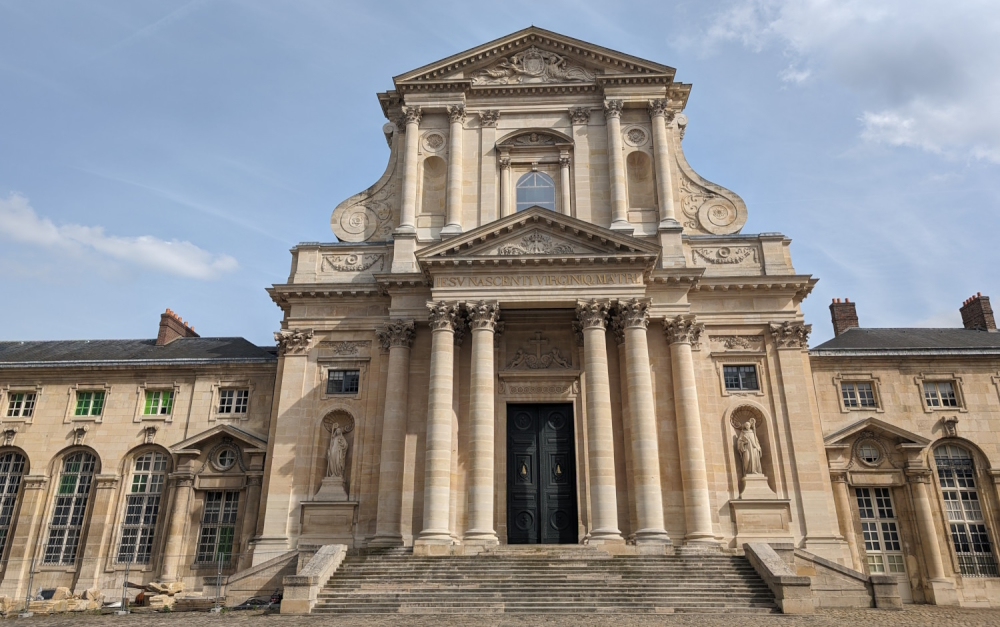
The inception of Val de Grâce dates back to 1621 when Queen Anne of Austria, the devoutly Catholic wife of King Louis XIII, set up a Benedictine convent in the Faubourg St-Jacques district, along the famous pilgrimage route, Saint Jacques de Compostelle (aka El Camino or Way of St-. James). Married for 23 years without an heir, she vowed to build a magnificent church if God gave her a son.
After the birth of Louis XIV in 1638, she asked the royal architect François Mansart to build the Val-de-Grâce Royal Abbey and Church. The first stone was laid in 1645, and when the Baroque church with its grand dome and elaborate sculptures was completed in 1667, it was considered a symbol of royal piety and architectural brilliance.

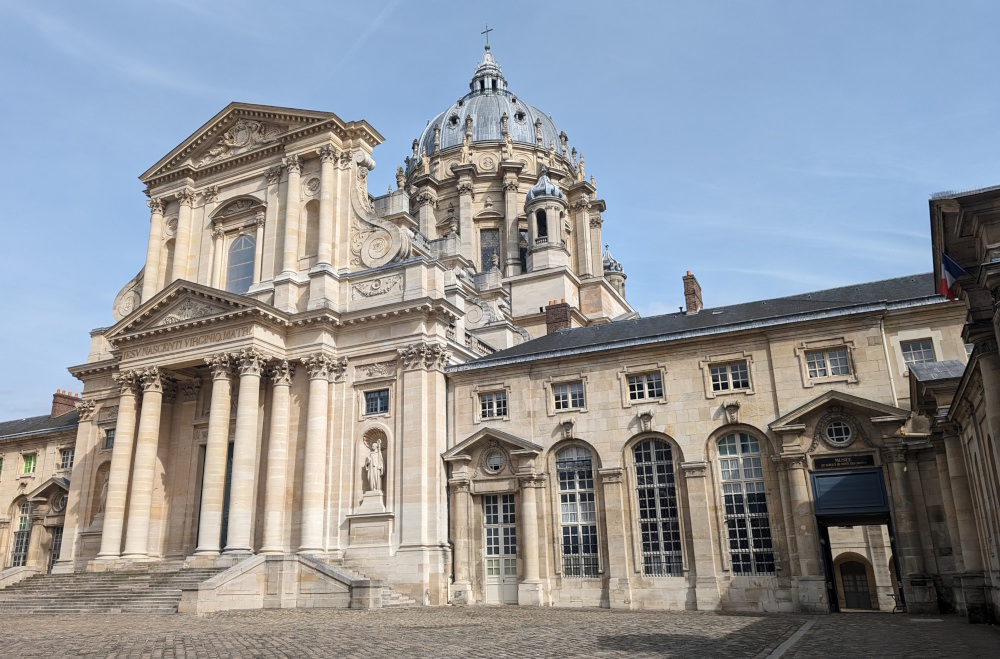
Mansart’s magnificent dome houses a fresco of celestial scenes by Pierre Mignard, “The Glory of the Blessed”. Equally stunning is the baldachin designed by Gabriel Le Duc, an ornate structure over the high altar reminiscent of the one in Saint Peter’s Basilica in Rome. The historic Cavaillé-Coll organ, originally from the Panthéon, was installed in the church in 1891, and still used today for classical concerts as well as liturgical services, despite suffering damage in the June 2023 explosion (see below).
The Abbey’s Transition to a Military Hospital
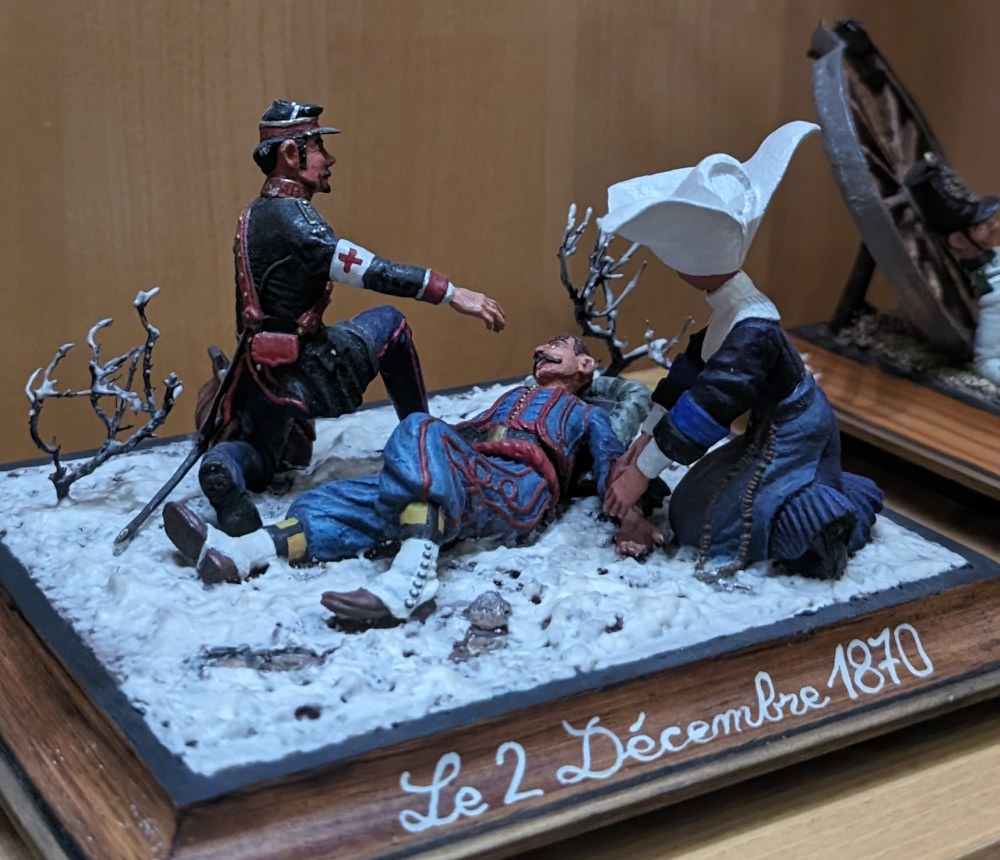
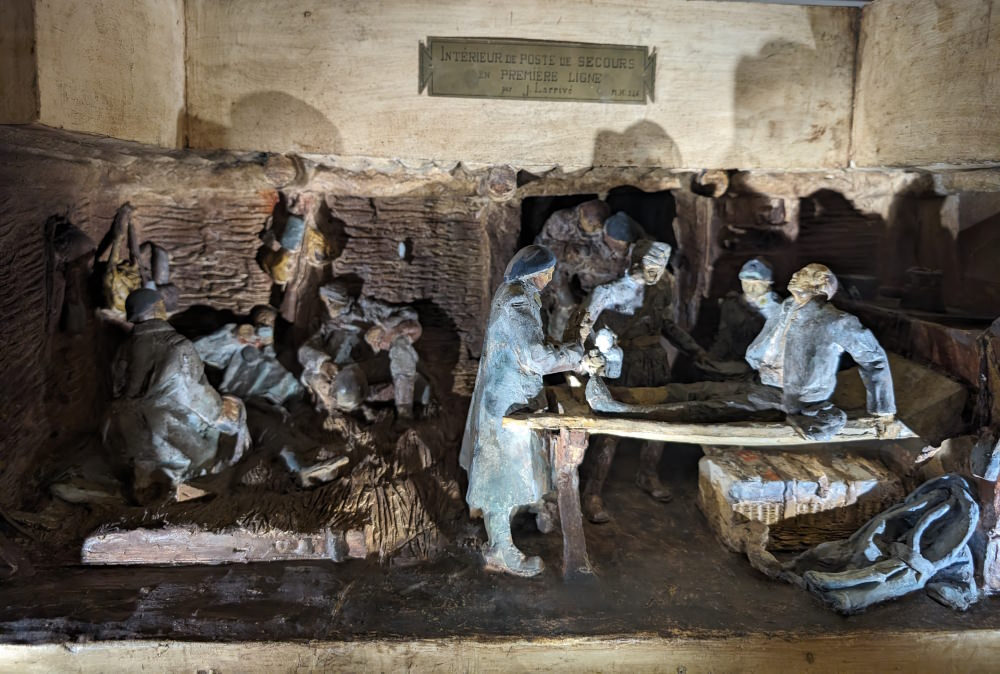
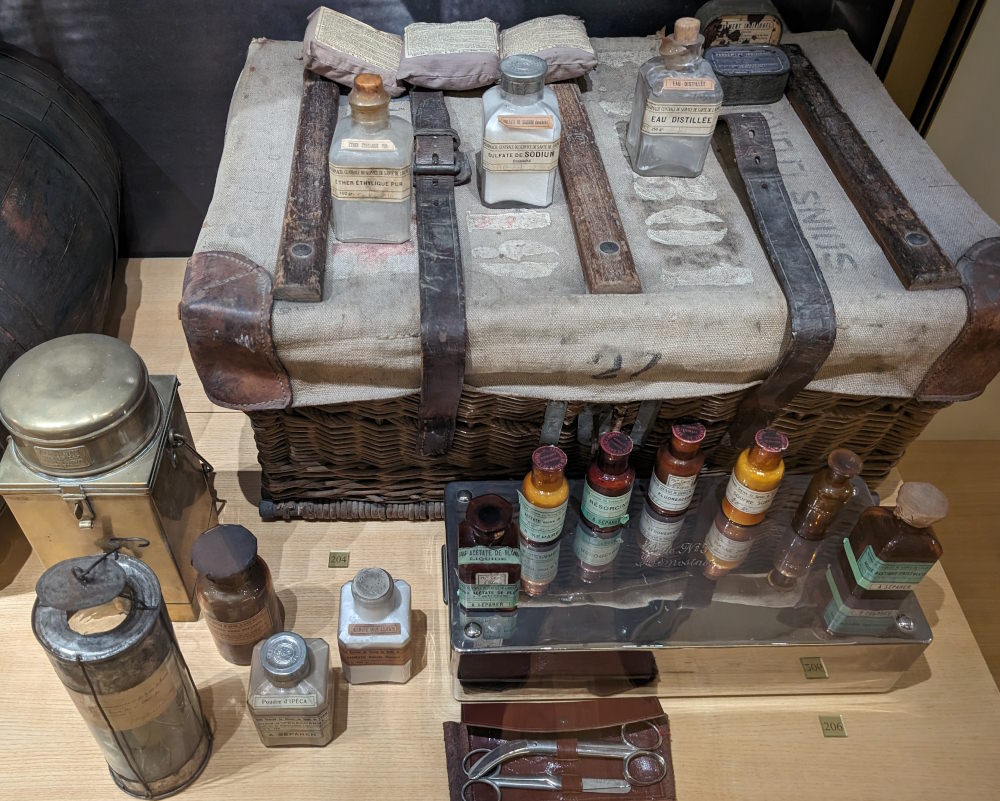
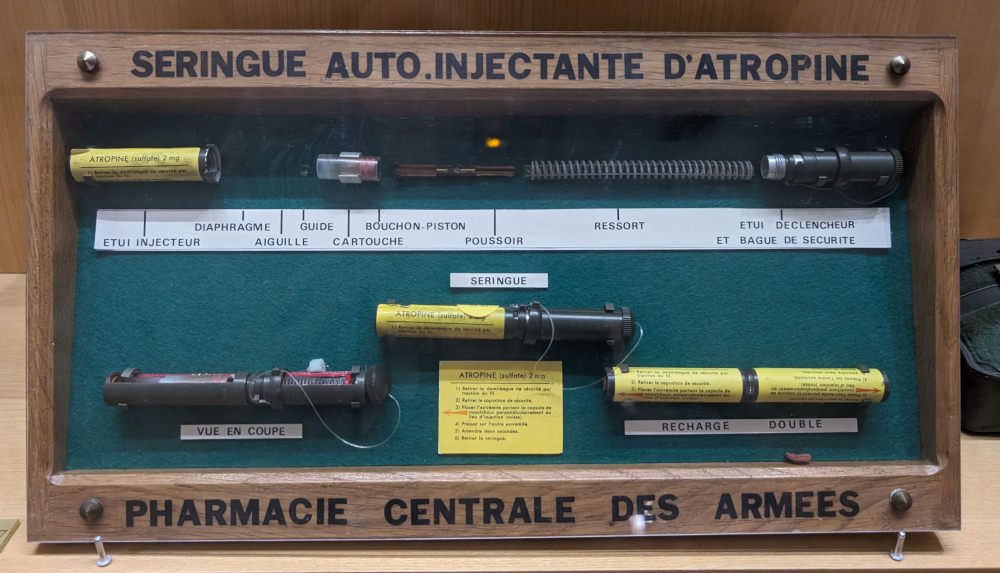
Like many religious institutions, Val-de-Grâce was seized and secularized during the French Revolution. While the church was spared, the abbey was transformed into a military hospital in 1793, its substantial buildings and central location ideal for treating soldiers wounded during the decade of conflicts known as the French Revolutionary Wars (1792-1802). Click on photos for captions.
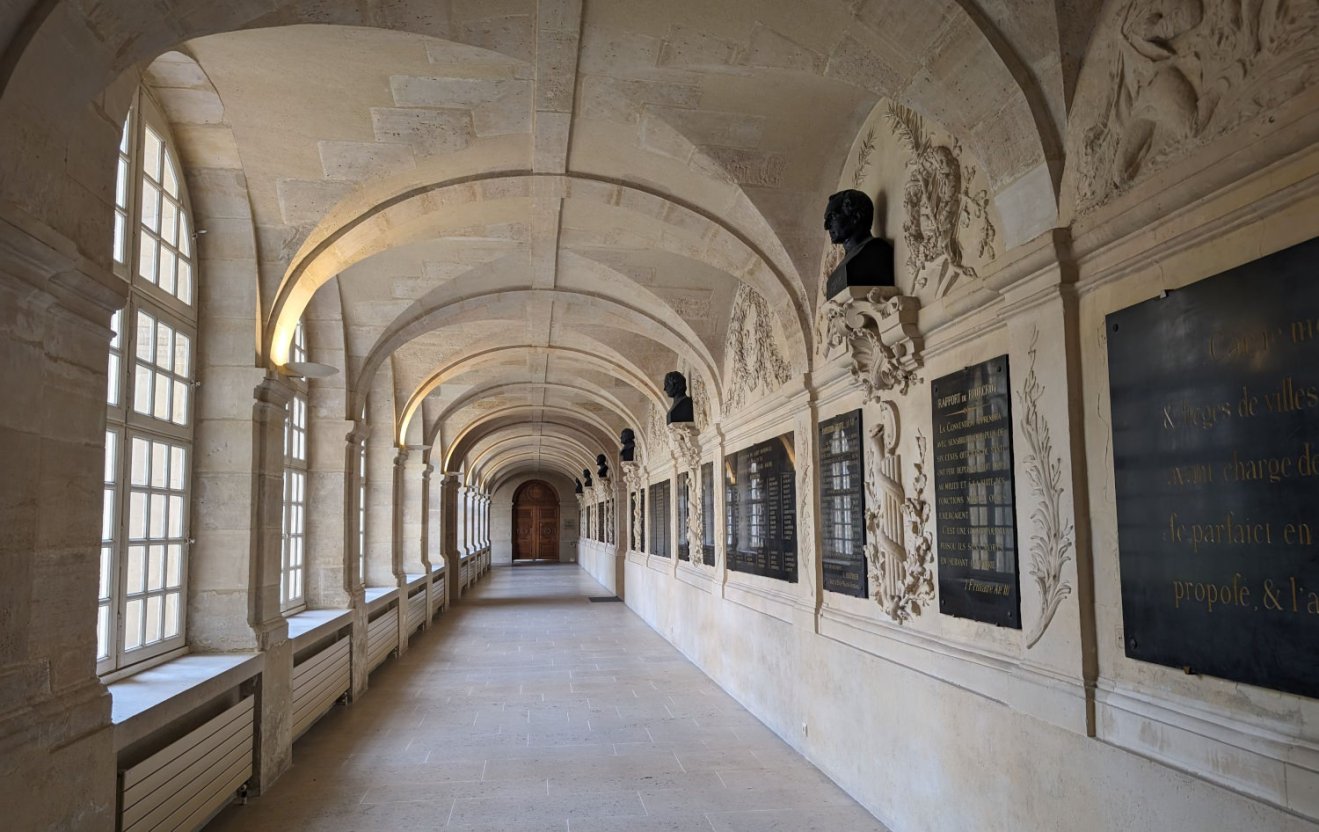
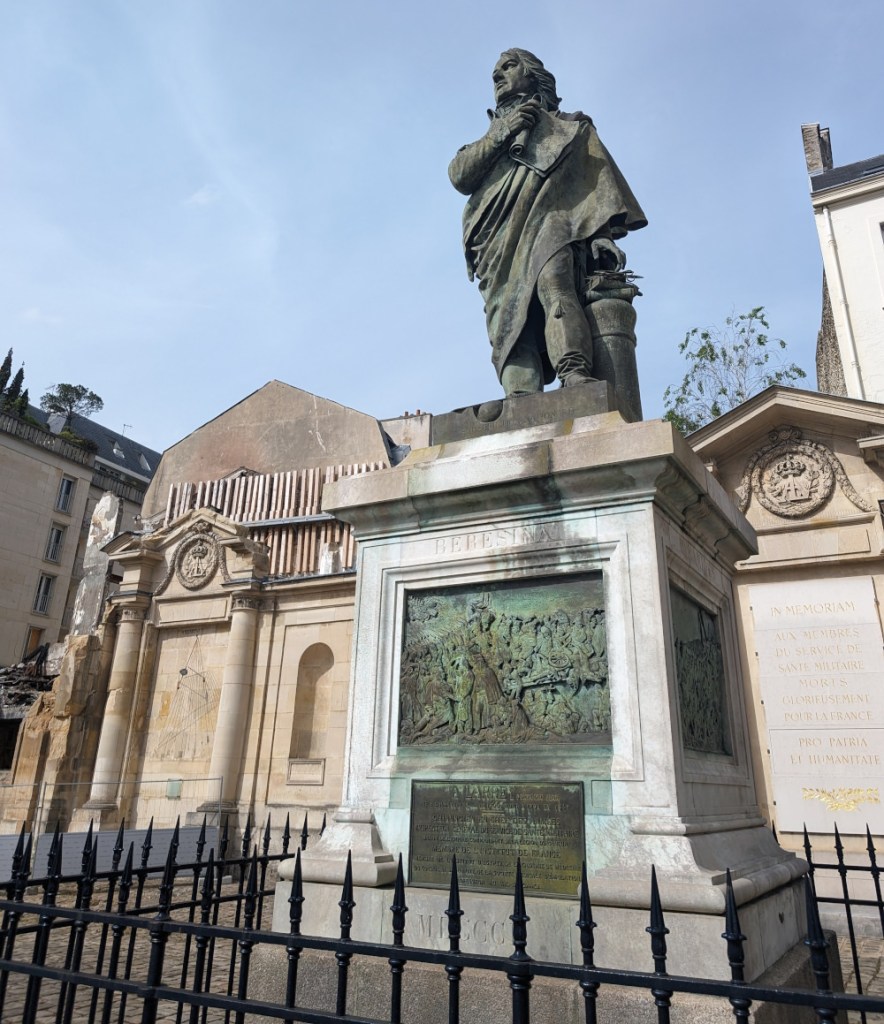
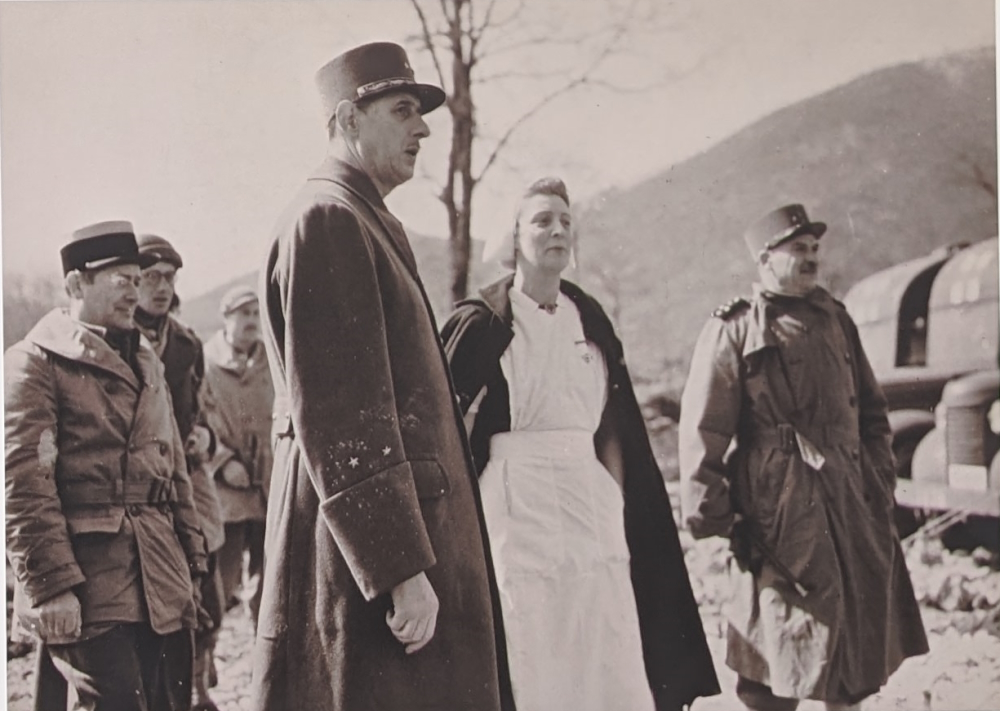
The hospital quickly became known for its high standards of care and innovative medical practices (and if you read my last members’ article about the sorry state of the Hôtel-Dieu Hospital on the Ile de la Cité in the 18th century, you know this wasn’t always a given in French hospitals at the time). With the addition of a military medical school in 1850, the prestige and importance of Val-de-Grâce only continued to grow as their services supported the armed forces in wars throughout the 19th and 20th centuries.
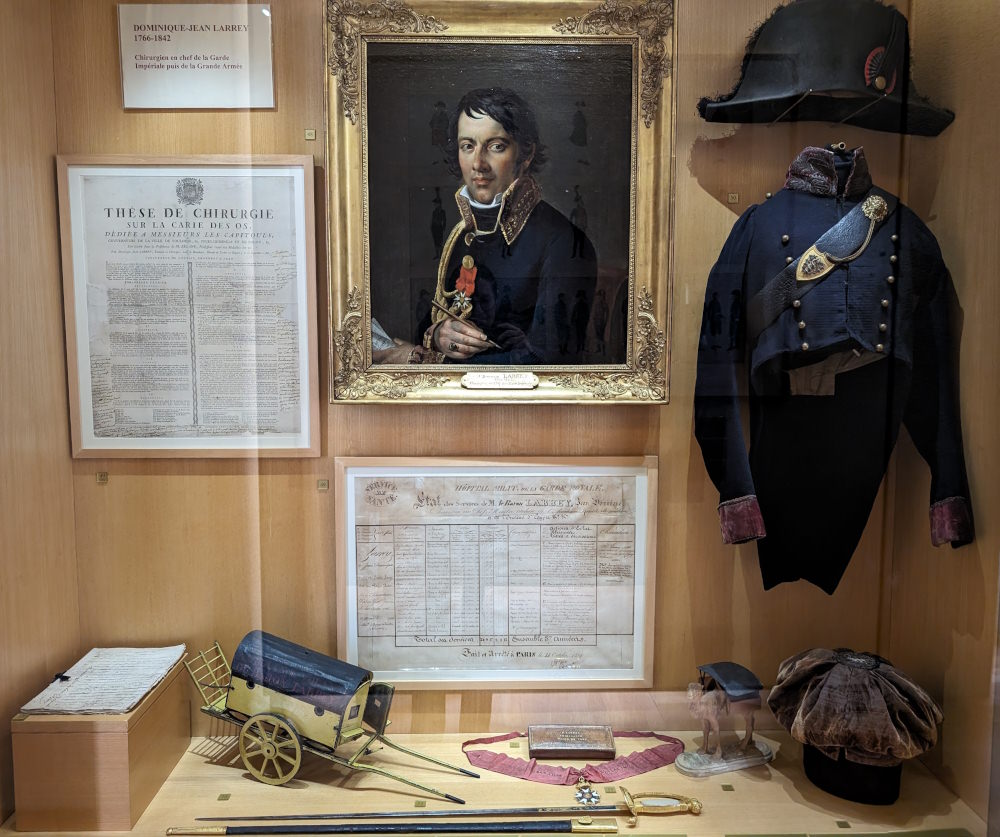
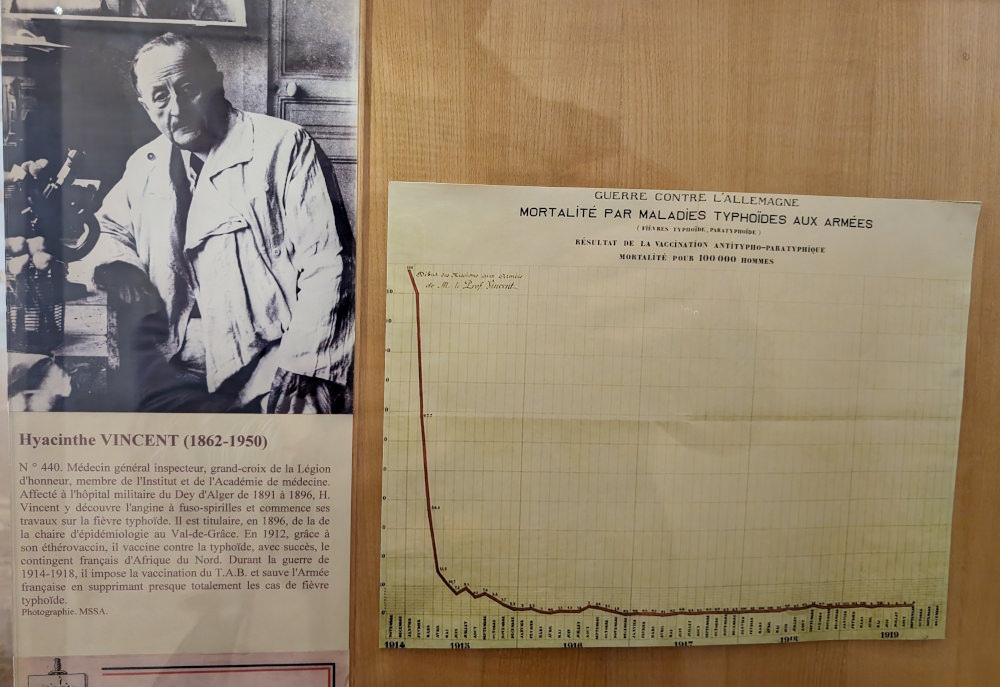
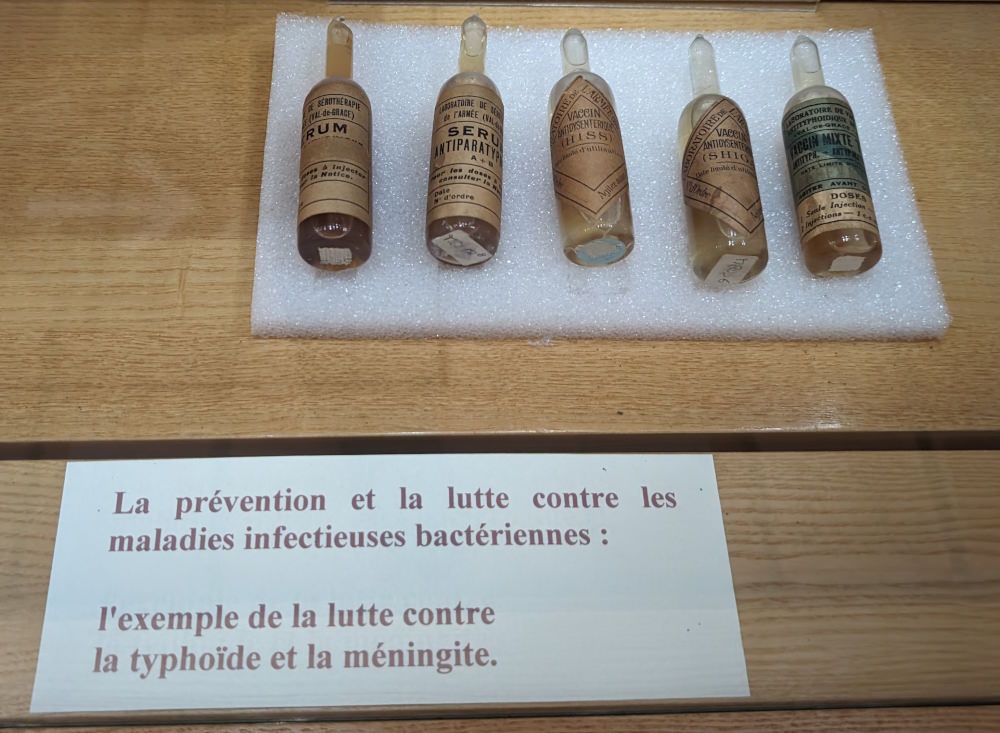
Val-de-Grâce produced some of history’s greatest military doctors, surgeons, and medical researchers. For example, the Army’s Chief Surgeon Dominique-Jean Larrey is considered the father of emergency medicine, with his pioneering use of mobile surgical ambulances on the battlefield during Napoléon I’s campaigns. And it was one of the epidemiology physicians at Val-de-Grâce, Dr. Hyacinthe Vincent, who developed the vaccine against typhoid fever in 1910 which proved crucial in protecting the French, British, and US troops from severe outbreaks during World War I.
The Modern Era: Val-de-Grâce Continues Its Evolution
Val-de-Grâce evolved into one of France’s most prestigious military hospitals, known officially as L’Hôpital d’Instruction des Armées du Val-de-Grâce. In the 1970s a new, state-of-the-art hospital and medical school adjacent to the historic site, built to accommodate advanced medical technologies and provide comprehensive care to military personnel and their families. It was also where high-profile individuals, such as France’s presidents, were treated under strict confidentiality.


The hospital operated until 2016, when it was closed as part of a broader restructuring of military medical services (the military school and administrative offices are still there). Much like the Hôtel-Dieu, the Val de Grâce site is being transformed into the “PariSanté Campus”, a cutting-edge hub for digital health and medical innovation. Scheduled to be completed in 2028, this new facility will host various research and innovation institutions.
Val-de-Grâce Gardens Will Open to the Public
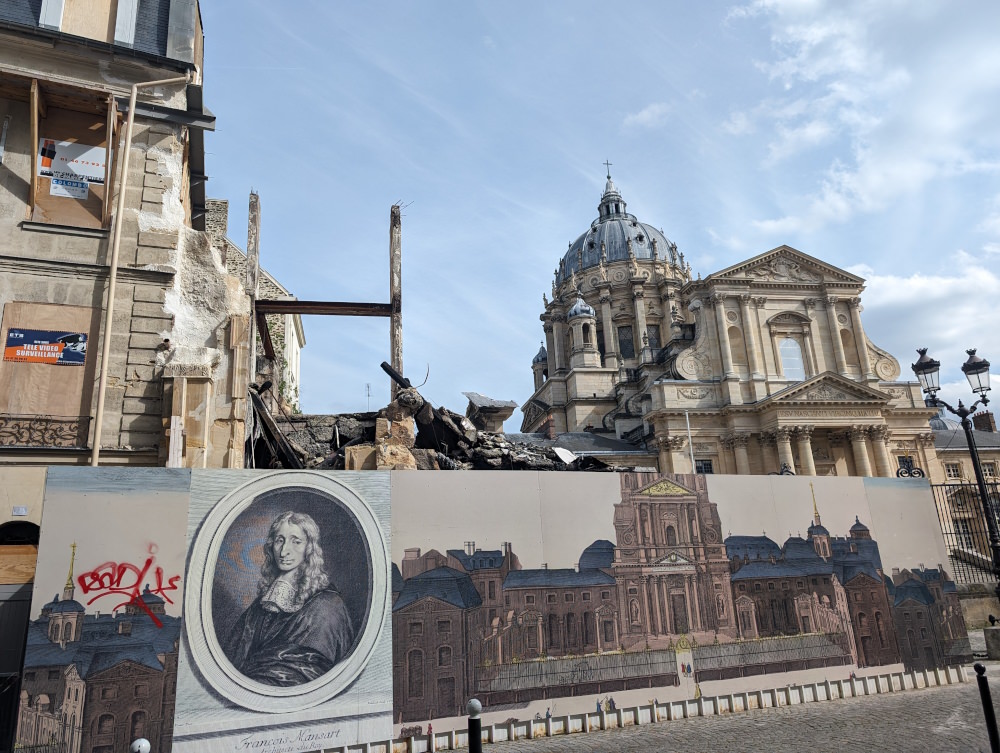
With this transformation comes a little bonus for everyone: the vast hospital grounds, which for now can only be glimpsed through the fence along the Boulevard Port-Royal (and in the model above), will be redeveloped and opened as a public park in 2026. This includes the addition of 112 new trees and restoration of the historic pathways. Watch this space…
The Val-de-Grâce Military Medicine Museum

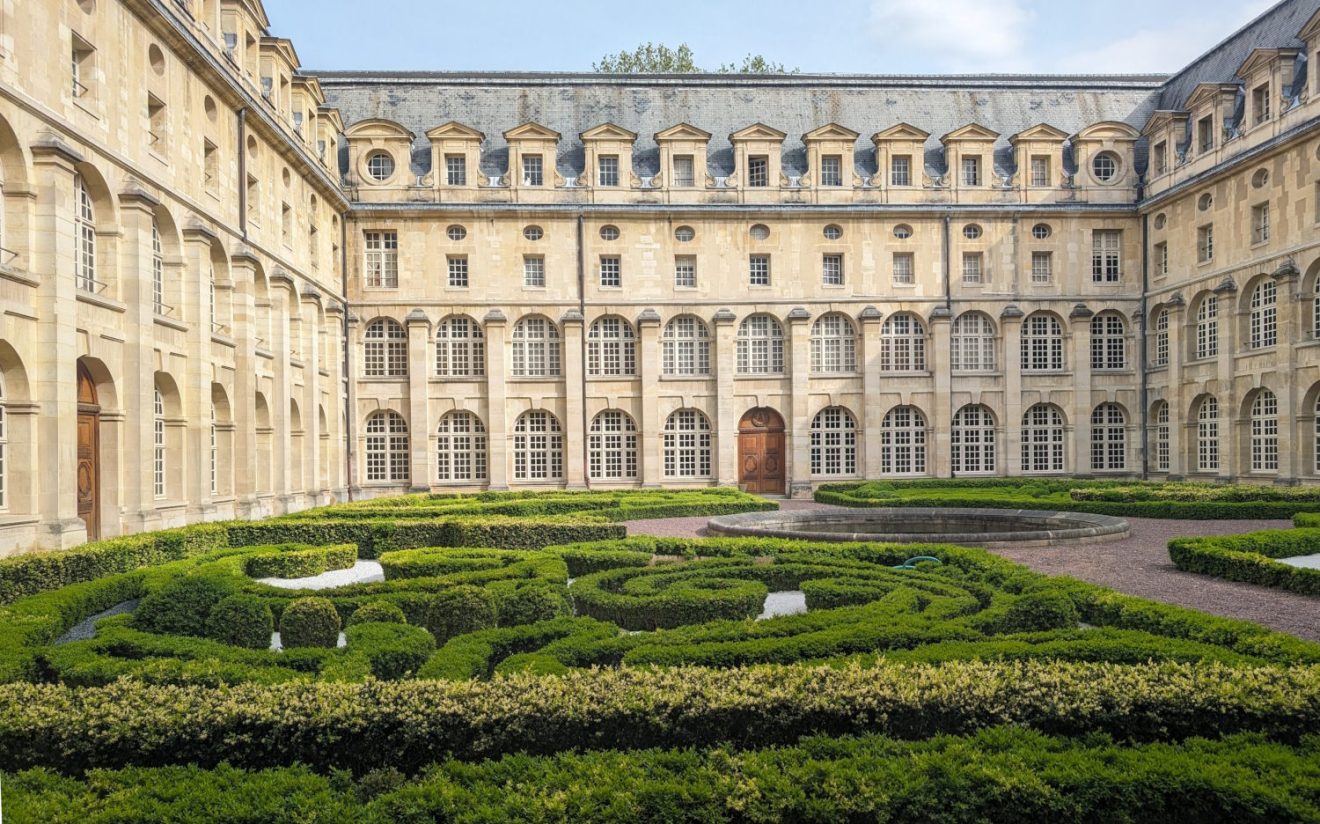
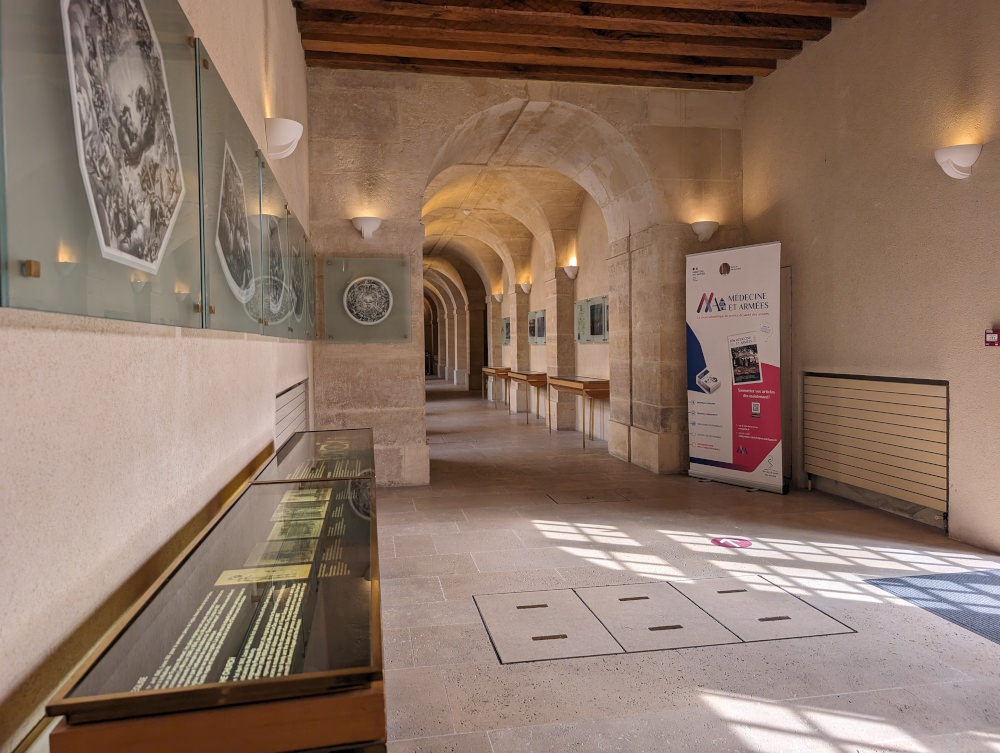
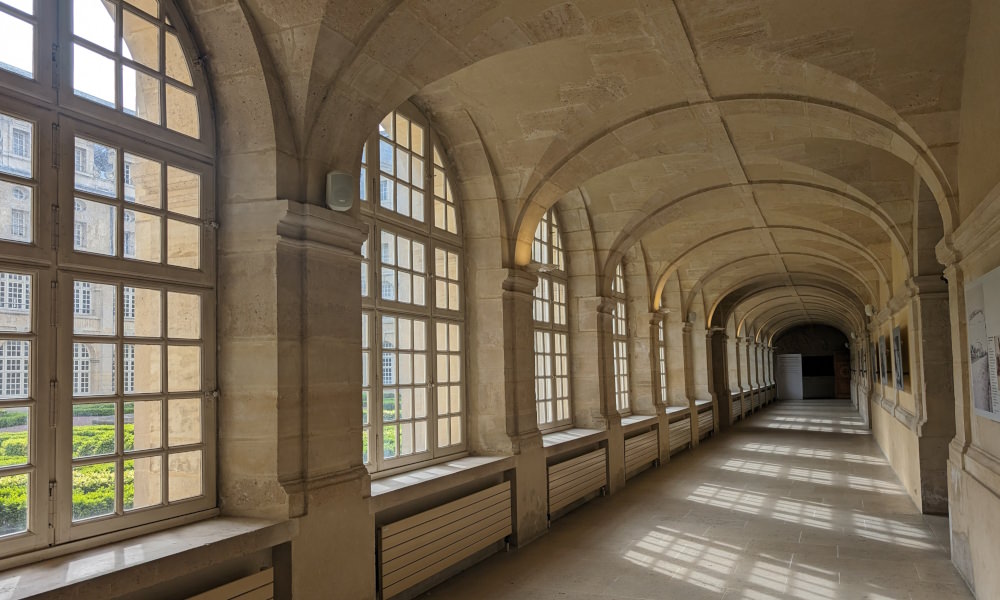
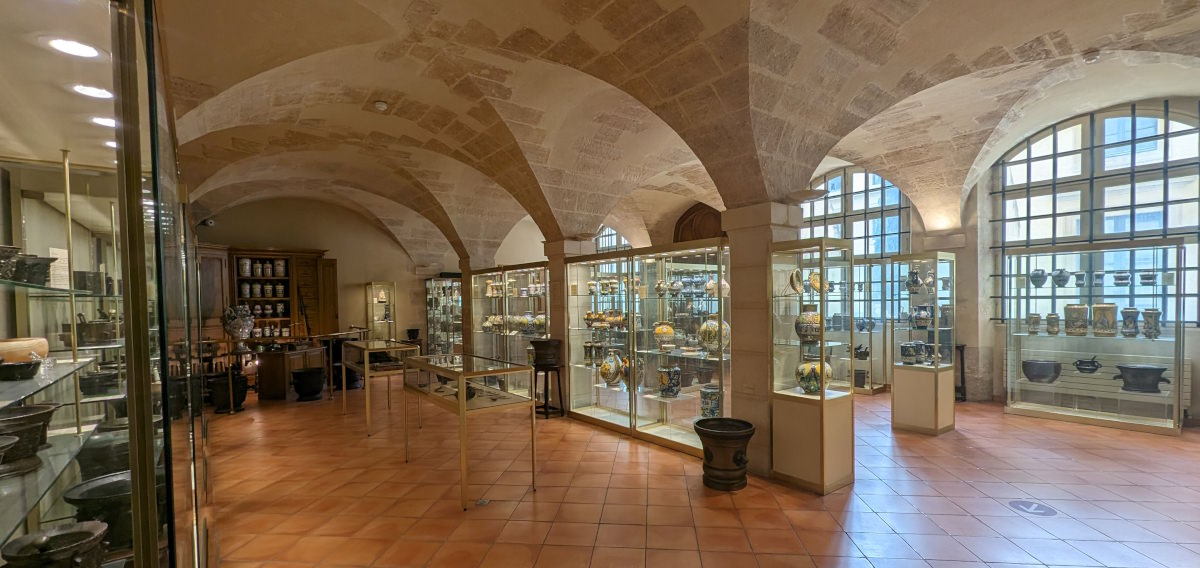
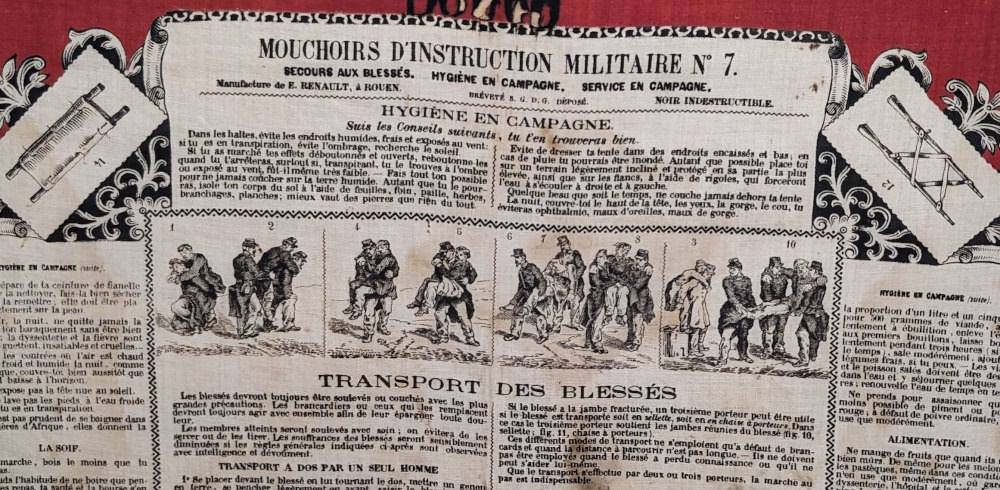
The Musée du Service de Santé des Armées (SSA), first opened in 1916, is a unique and fascinating exploration of military medicine housed in the historic buildings of the former cloisters of the royal abbey. While Paris is home to several notable medical history museums, this one stands out for its specific focus on military medicine. It’s also a great follow-up after you’ve visited the Army Museum at Les Invalides.
The museum’s collection spans several centuries, taking you from Louis XIV’s naval battles to Napoléon’s Egypt campaigns to medical supplies carried by soldiers in WWII. Some highlights of the permanent collection include:
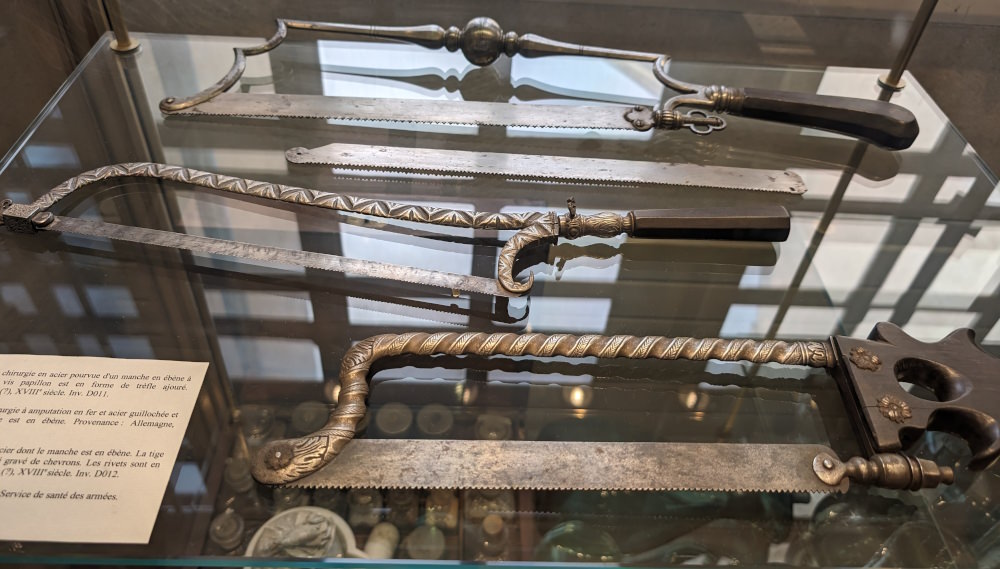
- Historical Medical Instruments: Okay, these can be a bit creepy at times, but also fascinating to see how they’ve evolved over the past four centuries.
- Field Surgery and Mobile Hospitals: Exhibits detail the evolution of battlefield medicine, from the early use of rudimentary tools to the development of sophisticated mobile medical units. The displays include models and reconstructions of field hospitals, highlighting the advancements made in treating wounded soldiers on the front lines.
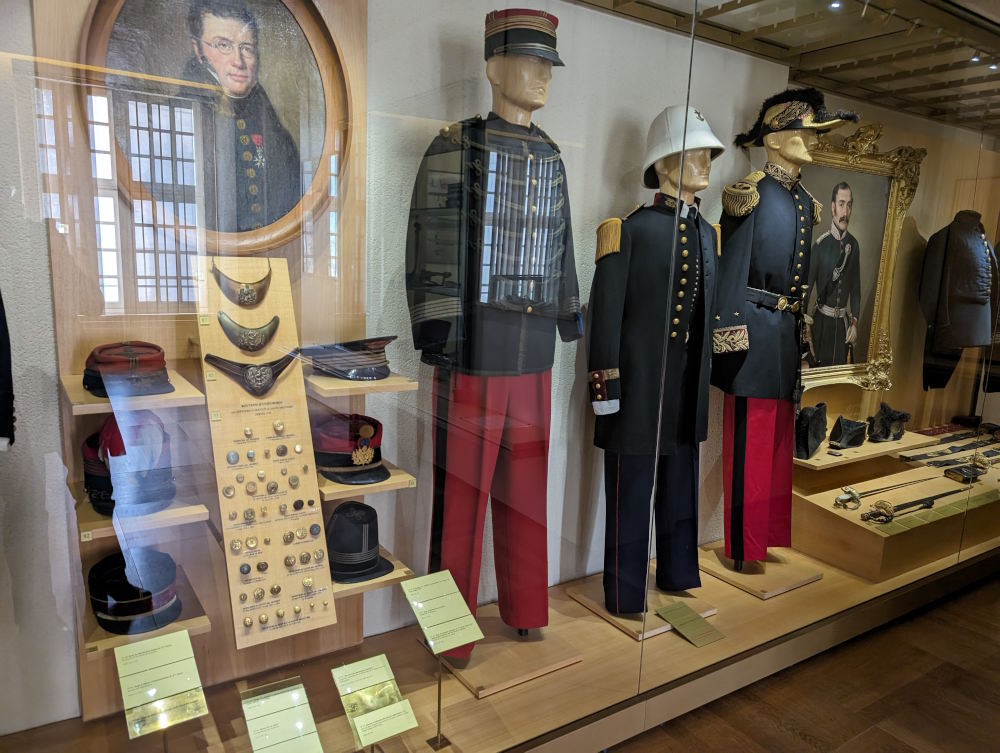
- Medical Uniforms and Equipment: Like any good military museum, you’ll see plenty of uniforms, kits, and personal equipment used by military medical personnel. These items offer a glimpse into the daily lives and challenges faced by military medics.
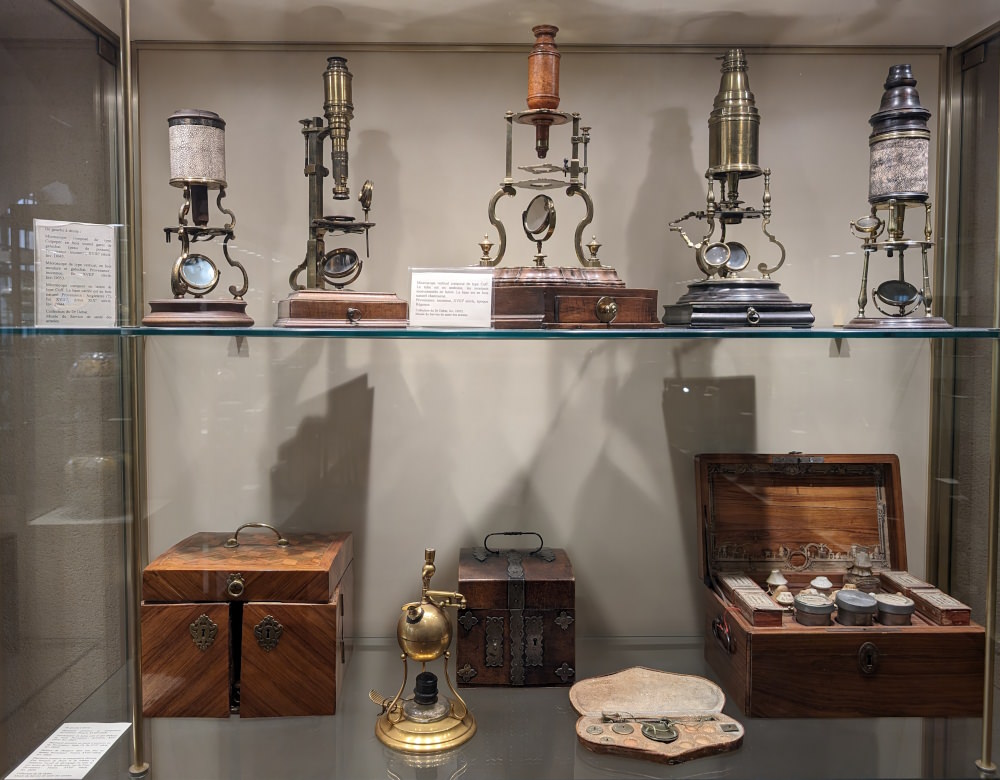
- Medical Research and Innovations: Scientific breakthroughs and medical innovations that emerged from military research, including a hyperbaric chamber and a Véronique rocket head. Exhibits include pioneering work in fields such as infectious diseases, vaccination, and surgical techniques.
- Military Pharmacists: Their participation in major expeditions around the world in the 19th century and their work on toxic war gases
- Civilian Care: how the military hospital helped care for civilian populations humanitarian actions, the creation of medical schools and Pasteur institutes, the fight against major endemics and infectious diseases (typhoid, plague, malaria) and progress in hygiene.
- Art and Medicine: The museum also explores the intersection of art and medicine, with a collection of medical illustrations, anatomical drawings, paintings depicting medical scenes, and the famous “Broken Faces” wax casts of mutilated soldiers showing the development of reconstructive maxillofacial surgery during the First World War.
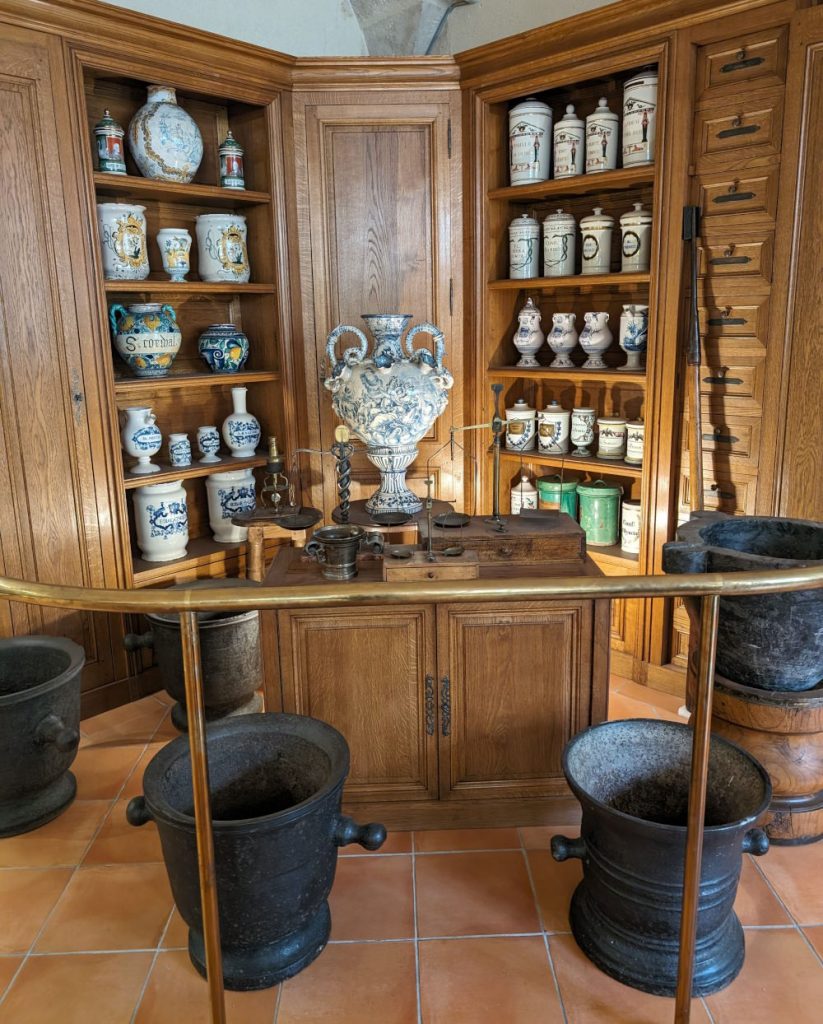
- Collection of Doctors Jacques and François Debat: An exceptional collection installed in the old Benedictine kitchens of Italian and French earthenware pharmacy jars, medical instruments, and one hundred and three mortars, the oldest of which date back to ancient Egypt.



Visiting the Museum
Musée du Service de Santé des Armées
1 Place Alphonse Laveran (at 279 Rue Saint-Jacques), 5th
Opening Hours: open daily except Monday and Friday from noon-6pm. Closed in August, January 1st, May 1st, and December 25th.
Getting Inside: Buzz the bell at the gate on the right to be let in; walk straight ahead to the doorway that says “Musée” where you’ll be asked for your photo ID and given a badge to wear; then the museum entrance and ticket desk is to your right (don’t worry, the military guards will tell you if you’ve gone the wrong way! 😉 )
Admission €5 (€2.50 for students, and kids 6-18 years old). Free entry on July 14th.
Accessibility: The museum is accessible to visitors with disabilities, however the church is not.
Language: Unfortunately, there are no English translations or audio guides, so you’ll need to upload your favorite smartphone auto-translator (Google Lens is great for this, you just hover over the words with your camera and it translates the words using the same font).
Latest News: The Facebook page is updated more often than their official website: https://www.facebook.com/museessa.valdegrace
Visiting the Church

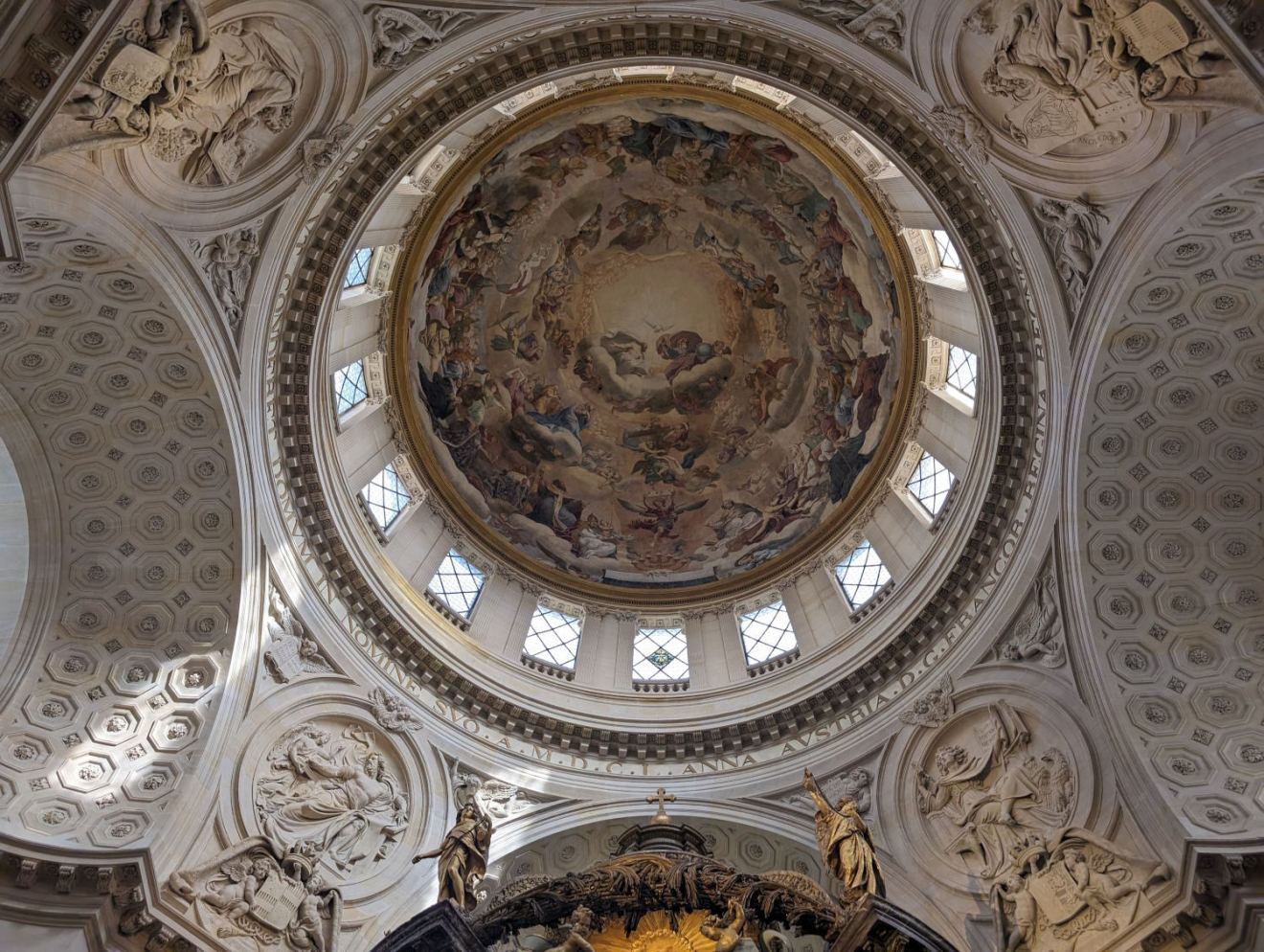

L’Eglise Notre-Dame de la Nativité du Val-de-Grâce, also just known as the Chapelle du Val-de-Grâce, celebrates Catholic masses every Sunday at 11am. You can see the church outside service hours as part of your museum visit, or during the free organ concerts every first Sunday of the month, October through June, at 5:30pm.
The next concert — the last for the season — is on June 2nd to commemorate the 80th anniversary of the Liberation of Paris, featuring organist Hervé Désarbre, saxophonist Antonin Cros, conductor Captain Frédéric Foulquier, and the musicians of the Republican Guard playing works by Bach, Berlioz, Copland, Marly, Ganne, Touche, Glenn Miller, Milhaud, etc. Doors open at 5pm.
See the 2024-2025 concert schedule here: https://www.reserve-citoyenne-paris.org/2024/07/musique-au-val-de-grace-saison-2024-2025.html
Damage from the Rue St-Jacques Explosion
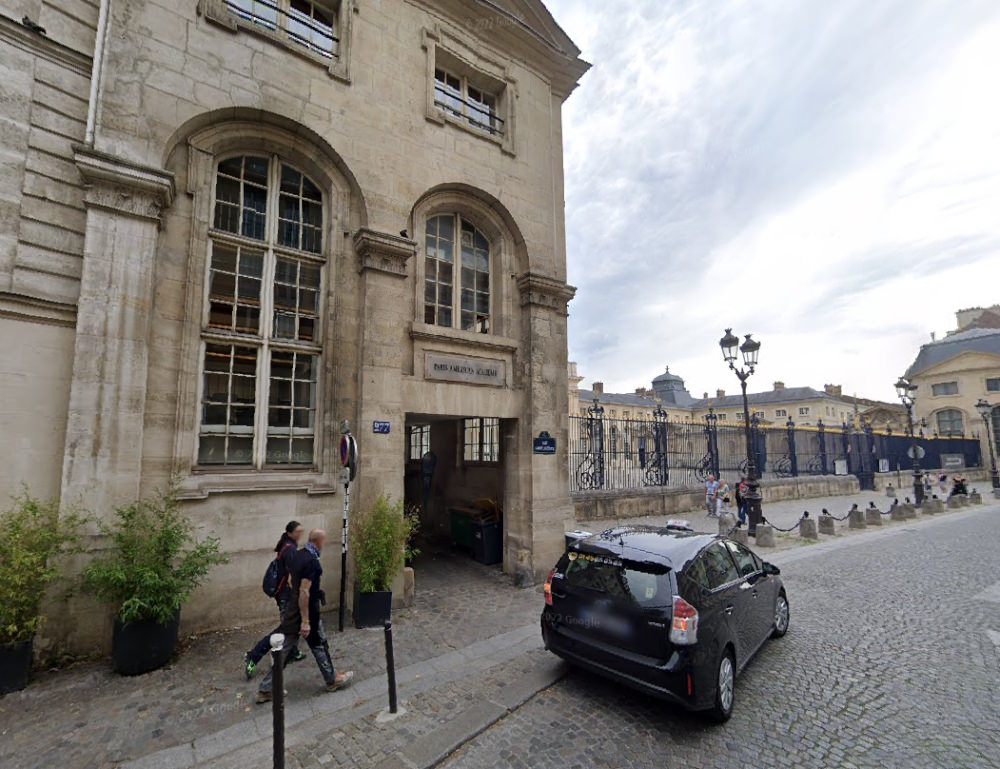
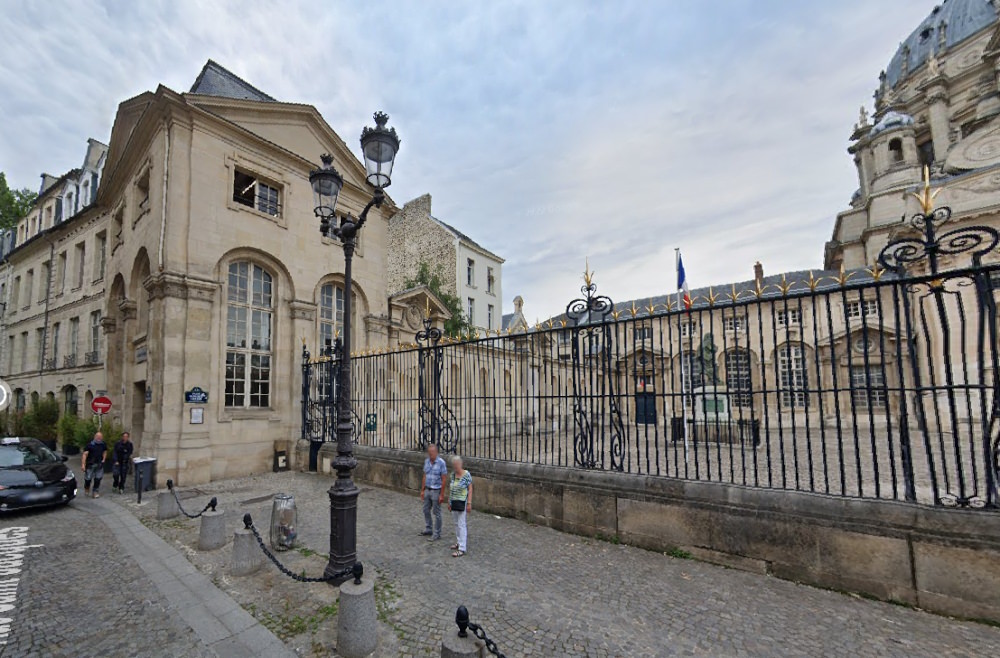
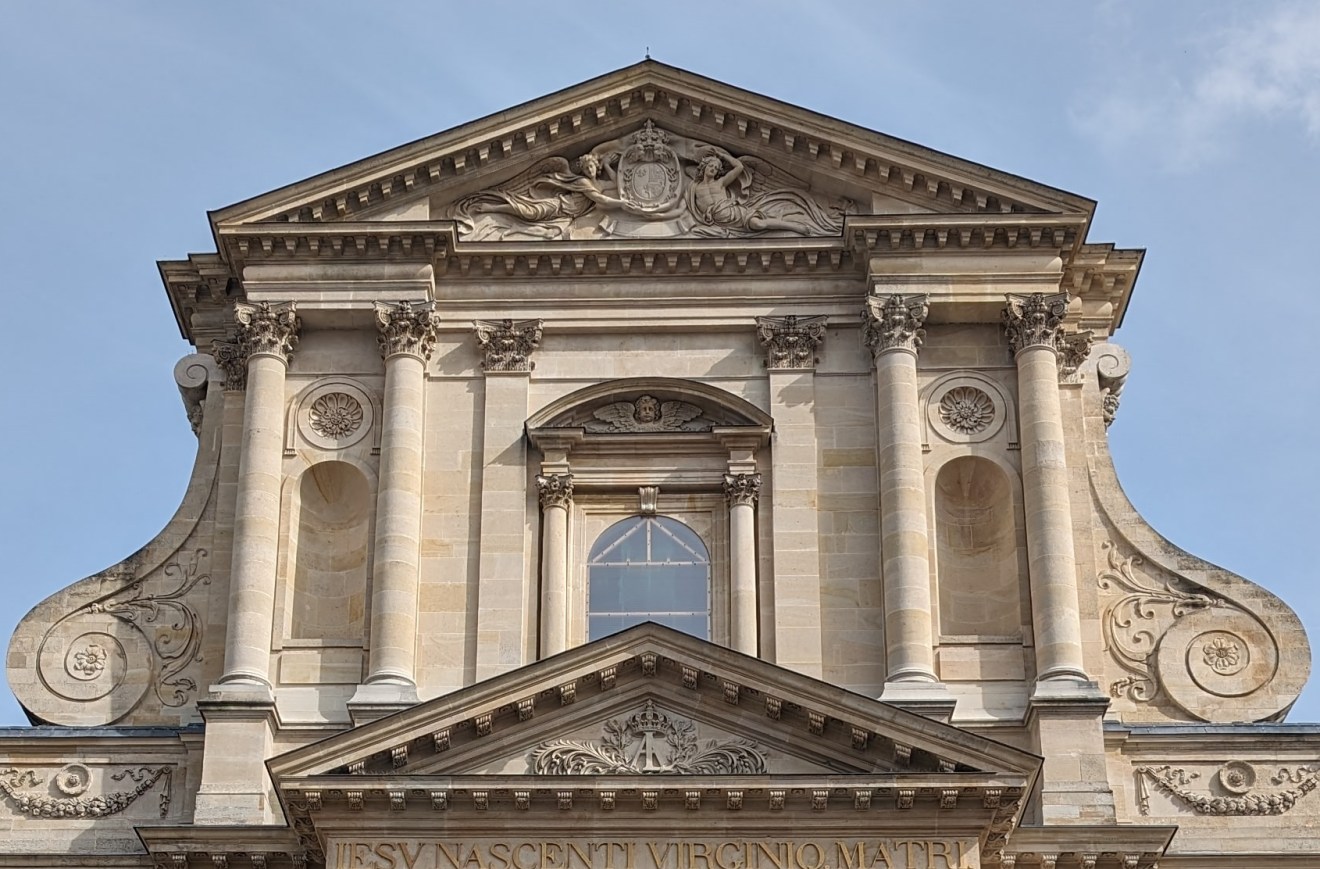
On June 21, 2023, there was an explosion next to Val-de-Grâce at 277 Rue Saint-Jacques, which completely demolished the Paris American Academy, killing three people. The explosion also damaged Val-de-Grâce Church, blowing out 15 stained glass windows, and affecting the historic Cavaillé-Coll organ and the monumental baldachin, both classified as historical monuments. The first two images from Google Maps show the building before the explosion. The third photo shows the ruins of 277 Rue St-Jacques, and the last photo is a close-up of one of the temporary windows replacing the church’s stained glass.
While the church was only temporarily closed (and honestly, it still looks better than many neglected churches in Paris), fundraising efforts are underway to raise the approximately one million euros that will be needed to fully restore the church. If you’re feeling inspired to donate (tax deductible if you’re a French resident), check out the Fondation du Patrimoine website: https://www.fondation-patrimoine.org/les-projets/eglise-notre-dame-de-la-nativite-du-val-de-grace