


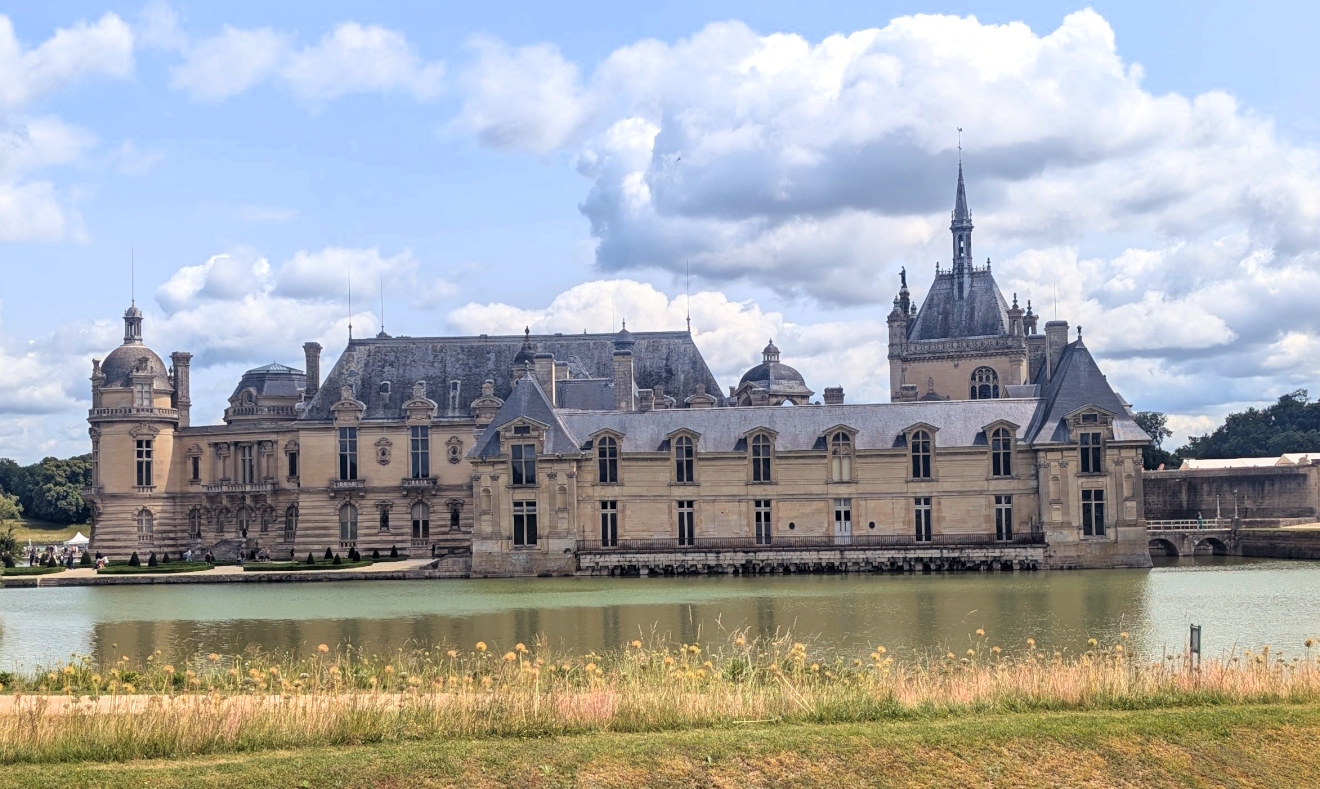
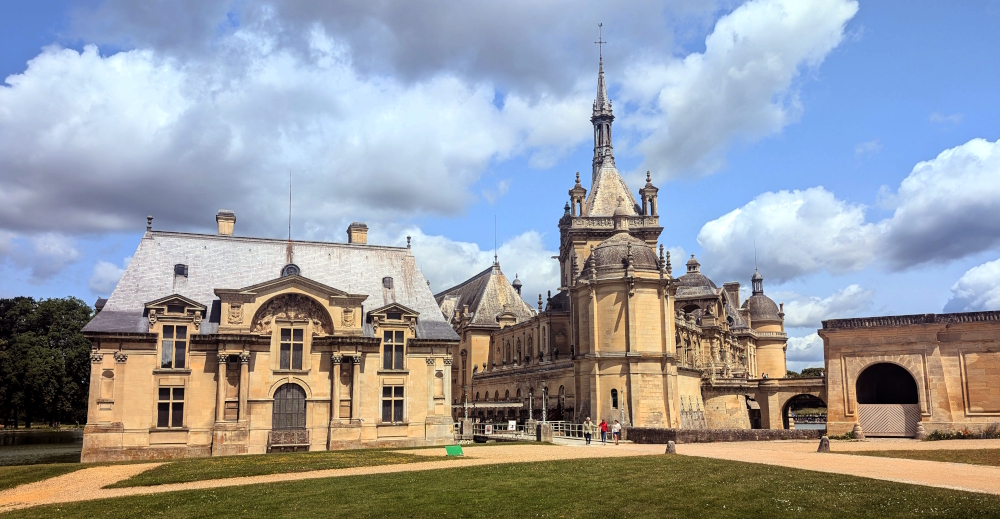
I’m a big fan of Chantilly, an elegant town surrounded by thick forests just 55 km north of Paris. Its historic chateau dating back to the French Renaissance hold’s one of the country’s most prestigious art collections, and the thatched-roof hamlet hidden in the vast gardens designed by Le Notre are supposedly what inspired Marie Antoinette to have the same (“but bigger”) built in Versailles. The 18th-century stables – now housing a Living Horse Museum – are even bigger than the chateau itself, and serve as the backdrop to Chantilly’s hippodrome. It was also the villain’s lair in the Bond film “A View to a Kill” (with Roger Moore, Christopher Walken, and Grace Jones).
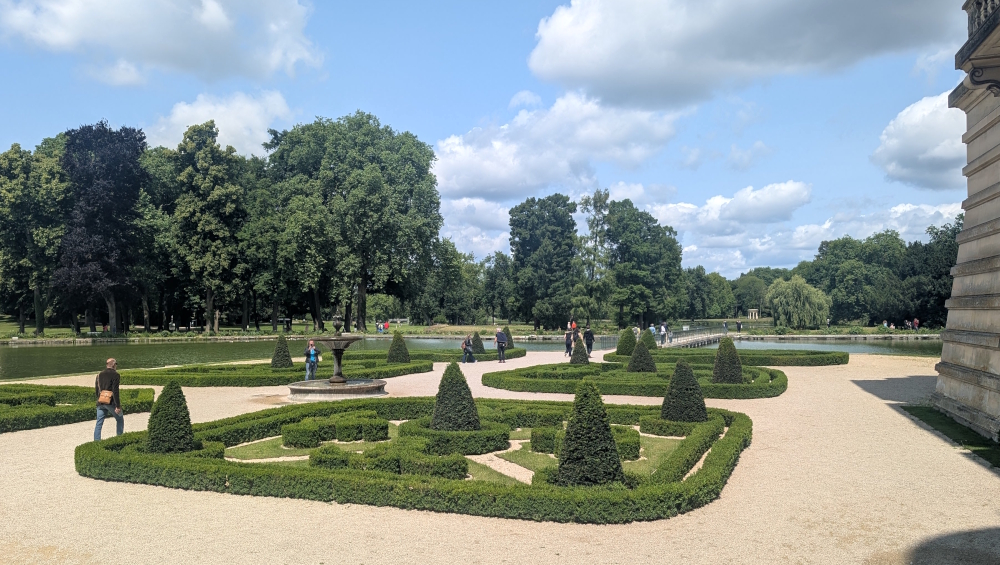
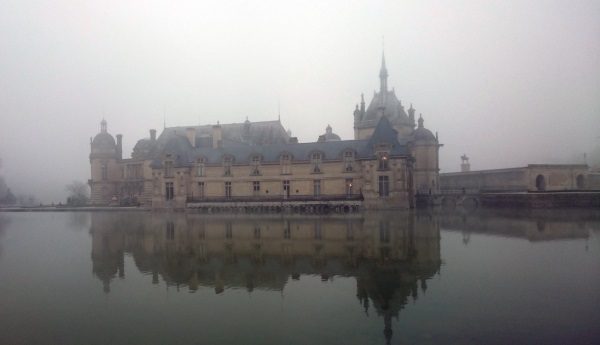
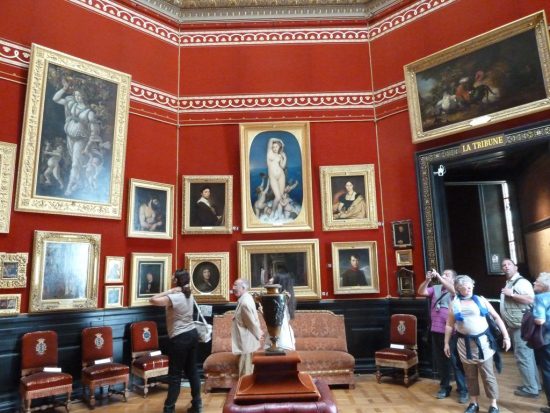
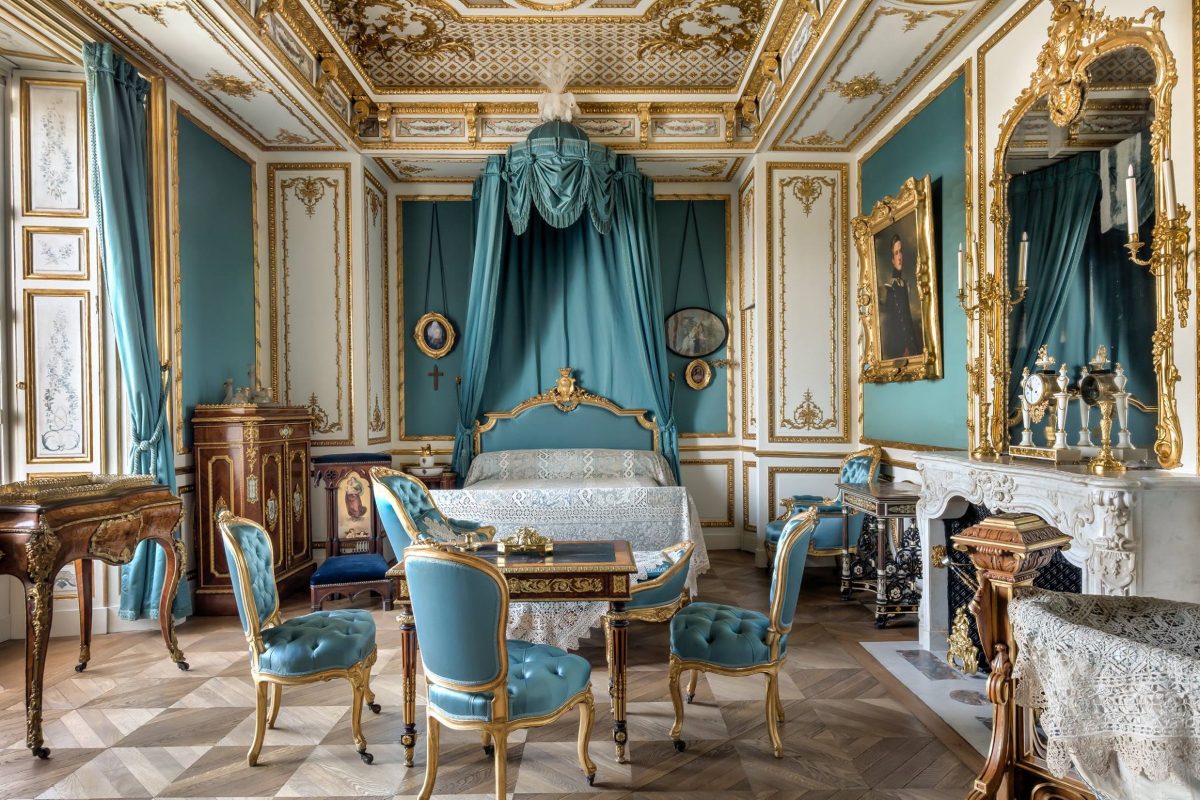
Chantilly isn’t only a wonderful alternative to Versailles for those who want to escape the busloads of tourists, but it’s also a nice daytrip for Parisians in need of some fresh air. Summer is great because you can fully enjoy the vast gardens and hamlet, and the walk through the forest between the train station and the château is pleasant even on a hot day. But winter is also lovely, because even on a “busy” day you won’t find lines at the gatehouse ticket window nor rooms in the château so crowded that you can’t even appreciate the beautiful décor (or take “human-free” photos, as my mother calls them). As you can see below, the grounds are equally enchanting in both seasons.

So how easy is it to get to Chantilly without a car? In theory it’s a snap (and twice as fast as the one-hour car trip): just take the 24-minute TER train or 45-minute RER D from Gare du Nord train station in Paris to the Chantilly-Gouvieux station, and then a 25-minute stroll to the château.
Except that even two Parisians — one who actually wrote a guidebook to Chantilly — almost couldn’t figure it out.
Why? Not to bore the pants off you, but each type of public transportation in France is run by a different, and sometimes competing, group. The Metro in Paris and part of the RER are run by RATP. But the rest of the RER and French trains are run by SNCF. And within the SNCF there are even regional authorities. They all want their own tickets and their own systems, too. Once you’ve figured out French trains they’re awesome. But good luck figuring them out!
Pick a Train
For Chantilly, you’ll often see websites and guidebooks mention the option of taking either the Transilien RER D (45 minutes) or the TER Hauts-de-France train ((formerly known as TER Picardie), 24 minutes) from the Gare du Nord. Usually they are staggered in terms of time, so at least one of them is running approximately every hour or so. But if you can choose, go for the TER because it’s faster and usually more comfortable (and makes fewer stops). And you don’t have to navigate the RER D maze in the bowels of the Gare du Nord station in Paris.
There are usually at least two trains an hour running from 6am until 11pm, but there can be gaps that leave you waiting bored in the station (with some pretty dodgy characters), or stuck in Chantilly because you’ve missed the last train of the day, so check the schedule to plan your day accordingly.
Get Your Ticket
The Chantilly-Gouvieux station is actually not in the Ile-de-France département, but in Picardie, exactly one station beyond the Navigo card eligibility zone. Which is a bummer because it means it costs more to get there: €9.50 each way last minute, or €5 each way if purchased a few days in advance.
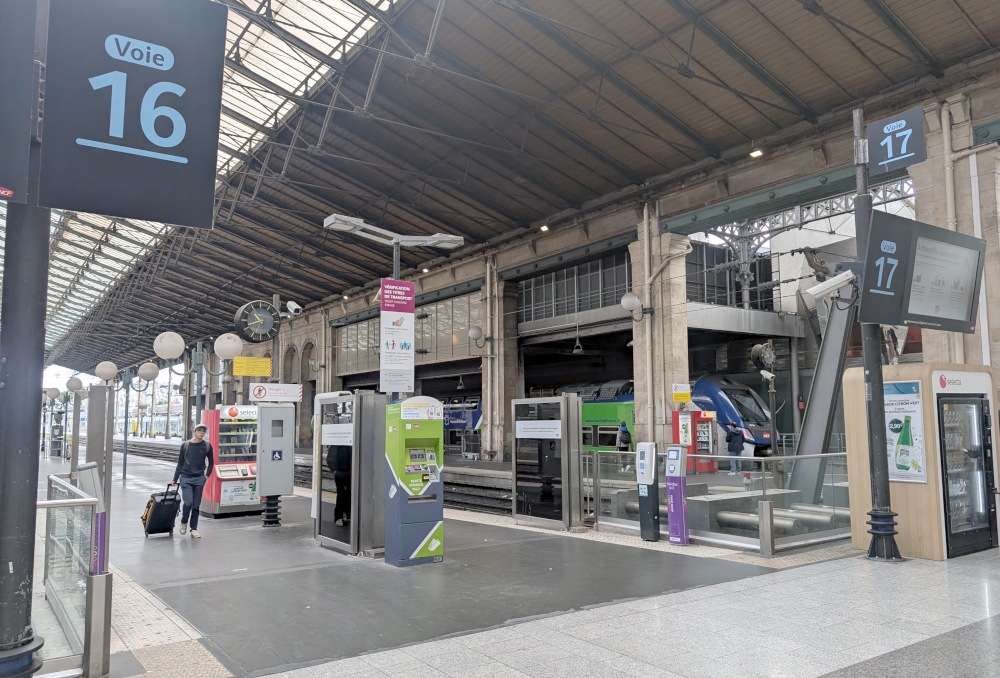
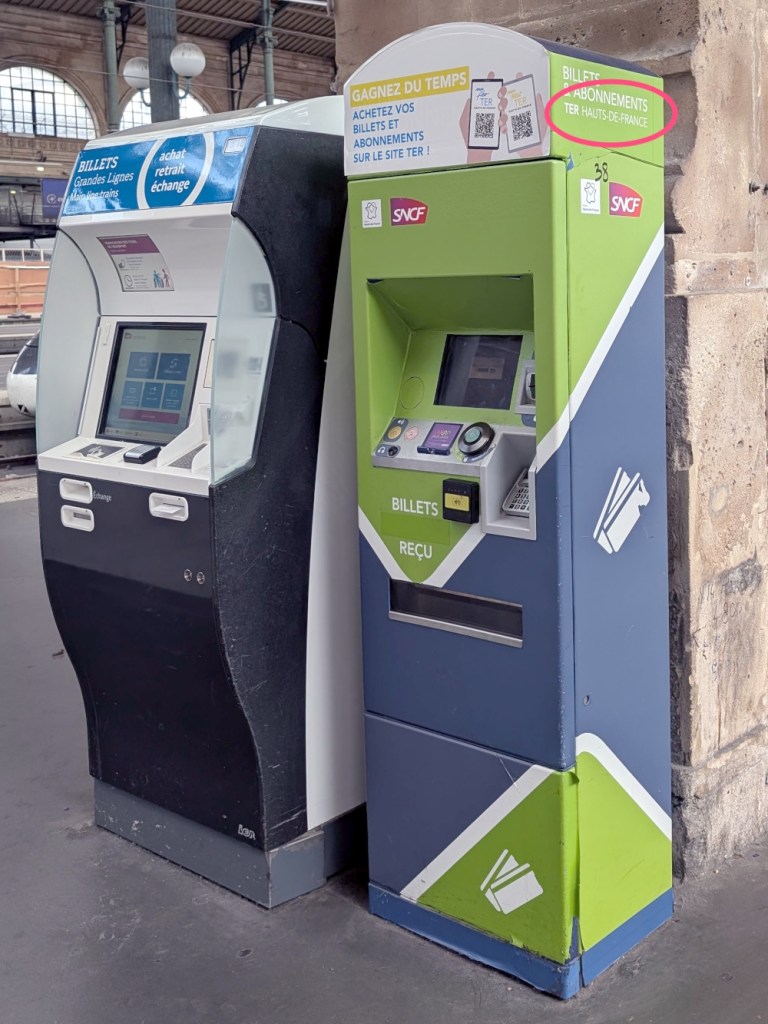
You can either purchase your ticket through the SNCF Connect app or website, or just purchase at the Gare du Nord station. This is where your two Parisians, after wandering around confused for 20 minutes, finally had to ask for help: there are several different ticket windows and ticket machines at the Gare du Nord, and the TER Hauts-de-France has its very own! To find them, look for the green ticket machines (pictured here) right on platforms 15, 16 and 17 of the “Grand Lignes” (these are the trains at ground level “Hall 1” of the Gare du Nord, don’t go downstairs). It will say “Hauts-de-France on them (circled in photo below right), but normally they’re the only green ones. They’re old, touchy machines, be patient with them. 😉
There is also a special offer, Le Pack TER Chantilly, which for €27 combines return train fare plus regular chateau entrance (or just €1 for kids under 12). You can buy these passes either at the ticket counter at the station, at the little green ticket machine at the station, or online in advance here (click “buy” right below the list of “The Advantages”). Note that this doesn’t allow entrance to the temporary exhibitions, it’s just for the main château, park and stables.
Find the Train

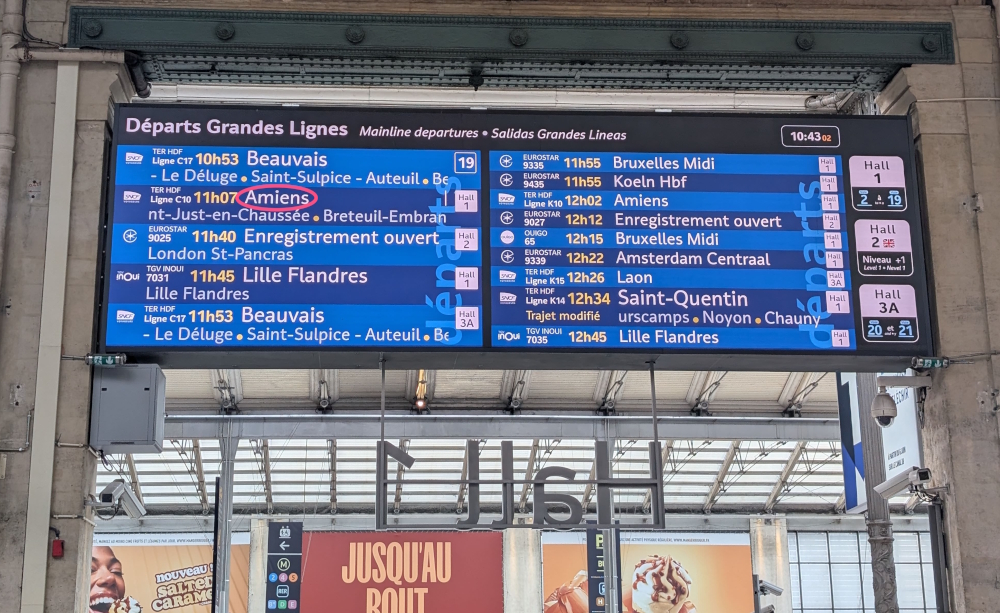
To get the train from Gare du Nord to Chantilly, it’s always on platforms 15, 16 or 17 in Hall 1. Look at the Departures (Départs Grandes Lignes) board for the trains destination Creil or Amiens (just make sure Chantilly is listed as one of the stops that is shown below it). The actual platform won’t display until a few minutes before boarding (before that it will just show the hall where you should wait). When in doubt, ask someone who works there.
If you’re going on a weekend, you’ll want to be ready to go as soon as the platform is announced, because you’ll be competing with all of the weekend cyclists trying to get on the same time (and while they should let those on foot on first, they don’t). When we went at 11am on a Sunday, we couldn’t sit together because it was so crowded (the 4pm return was a bit better).
From the Station to the Château
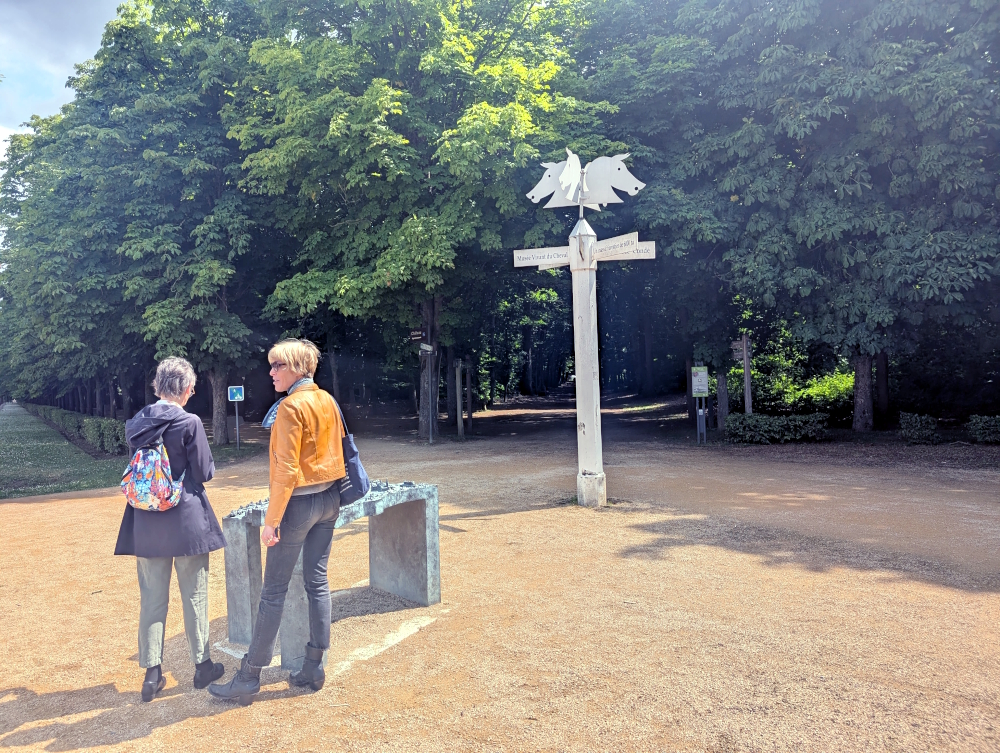
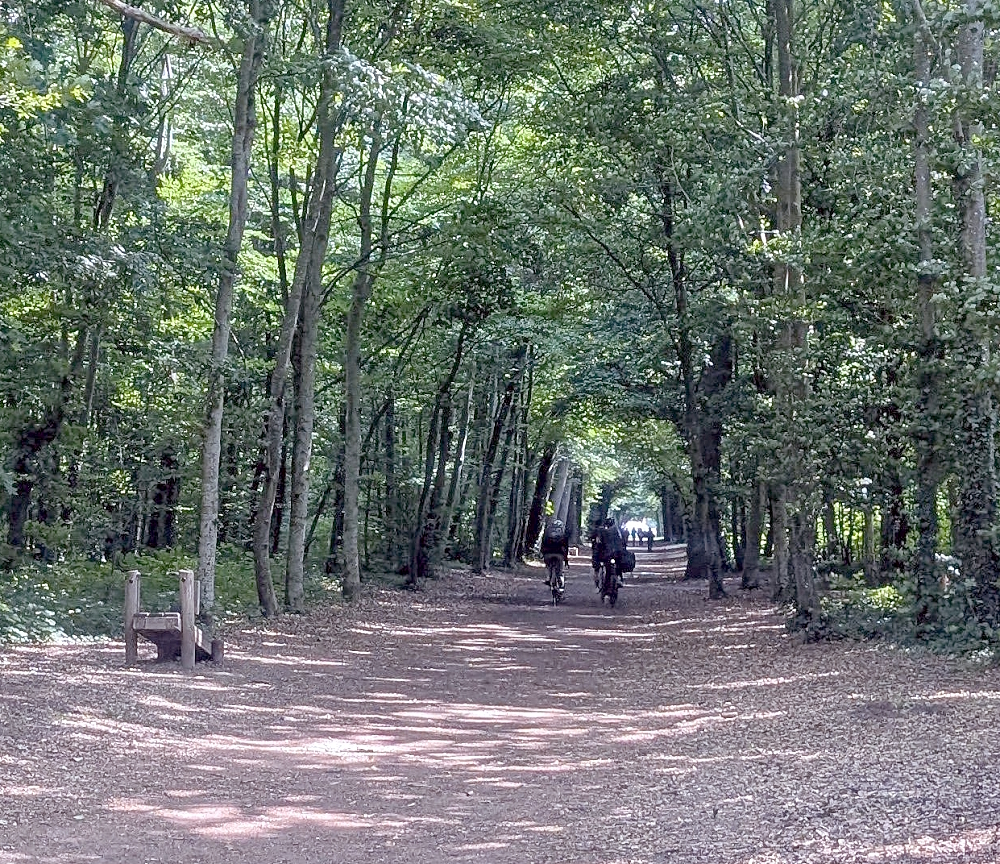
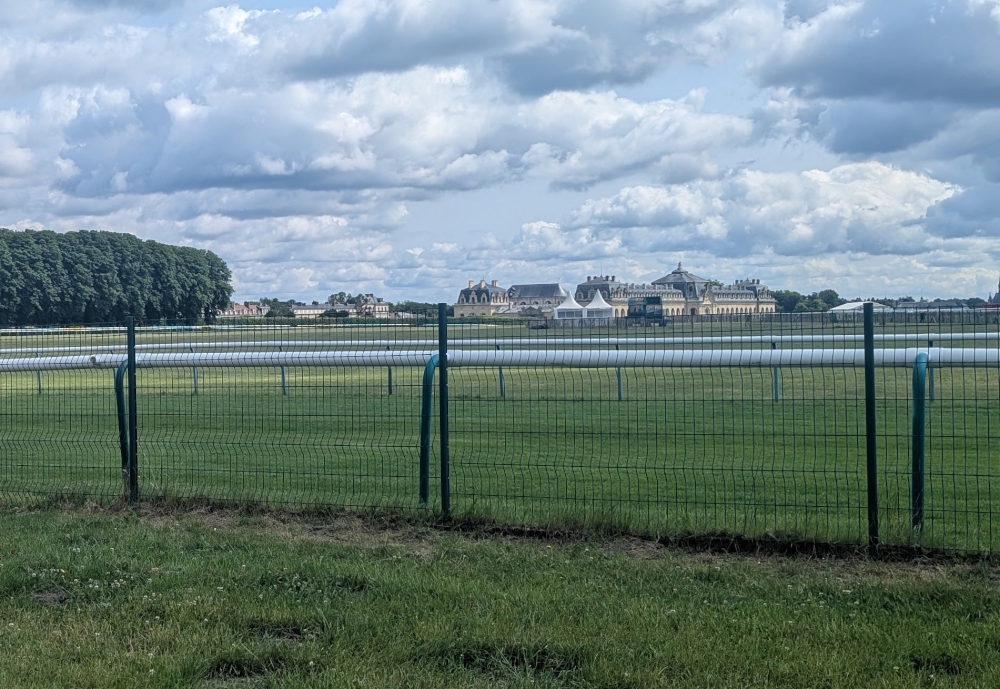
The train ride to Chantilly is just three stops, 24 minutes. From the station in Chantilly you can either try and hail a cab (not easy in the countryside) or wait for the free shuttle (I’ve never actually seen one), or take advantage of the fresh air and walk to the château (20-25 minutes). You can either walk through “town”, basically consisting of two main streets — Avenue du Maréchal Joffre and Rue du Connétable — with the chateau at the far end, or take the shortcut through the forest and around the hippodrome and stables (you’ll need shoes that are okay for mud and gravel in this case). Both directions are perfectly safe and scenic in their own way, but the shortcut through the forest is about 10 minutes faster. If you need a café break or want to stop in a bakery on the way, take the town route along Rue du Connétable.
Click to see full size photos with caption.

As there are plenty of guides to the actual château, no need to expand on that here, but I would recommend looking carefully at the official website to see what is currently showing for the temporary exhibition, at the stables (they do horse shows), and if there are any seasonal events like the Christmas Market or the Flower Show.
You can get a 1-day (€18) or 2-day €23) ticket for access to the château (including temporary exhibitions in the château), grounds and great stables (including equestrian demonstrations). You can also get a €9 ticket just for the grounds (access to the French formal garden designed by Le Nôtre, the Anglo-Chinese garden and the English garden), a €12 ticket just for the grounds and temporary exhibit in the Jeu de Paume (currently the legendary 15th-century illuminated manuscript “Très Riches Heures du duc de Berry” from June 7th to October 5th), as well as a €32 ticket that includes all of the above plus a horse show in the stables. There are many options if you know what you want to see or not see. A bit like Versailles, you may need two days if you want to see “everything” including the Hamlet in the gardens. Otherwise, if you can’t decide, get the standard 1-day ticket and start with the château, then the grounds, and finishing at the stables.
Provisions and Eating
There are several places to dine at the chateau and in the town, but it wouldn’t hurt to have some snacks and a thermos of coffee or bottle of water with you for the trip. On warmer days, reserve a spot at the Hamlet for open-air lunch or afternoon tea with strawberries and whipped cream, which is called chantilly in French because it was supposedly invested here! Picnics are allowed at the tables in the English Garden and near the playground and the Hamlet.


Older articles about Chantilly: